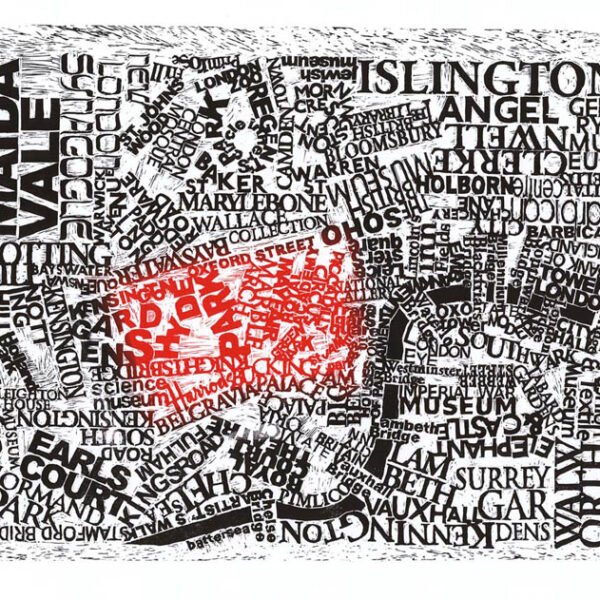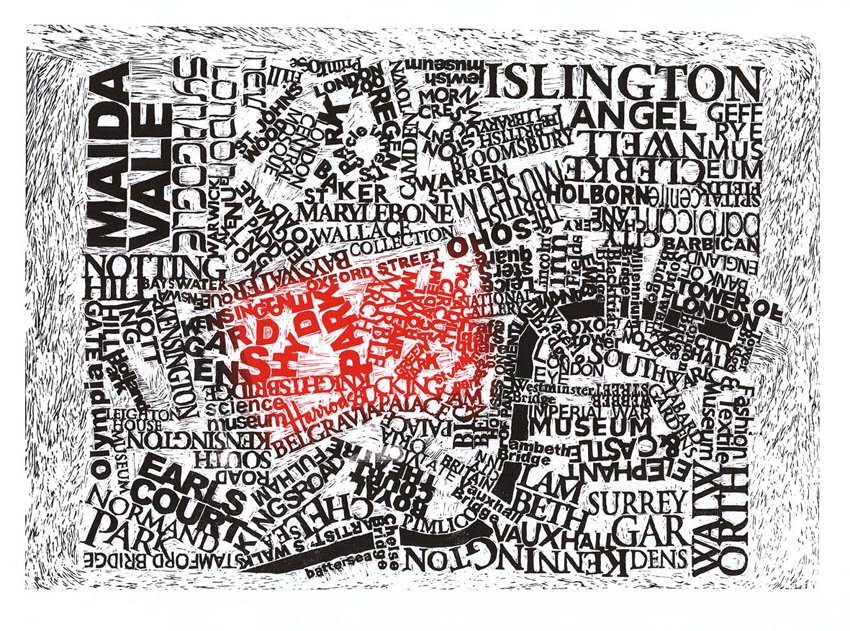
London
10 of 100 remaining
£500.00
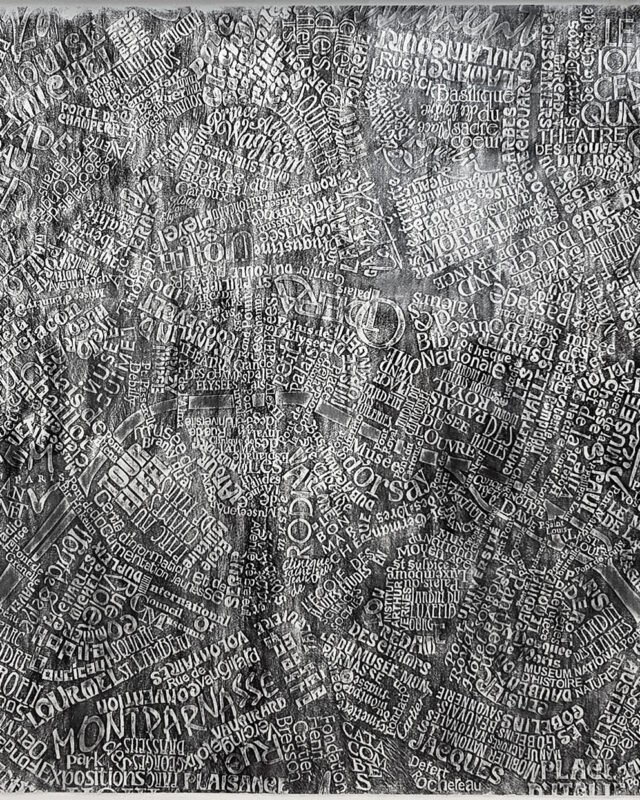
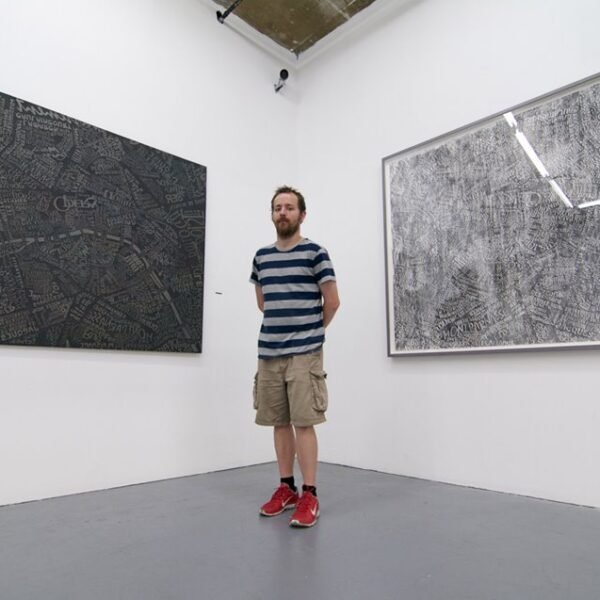
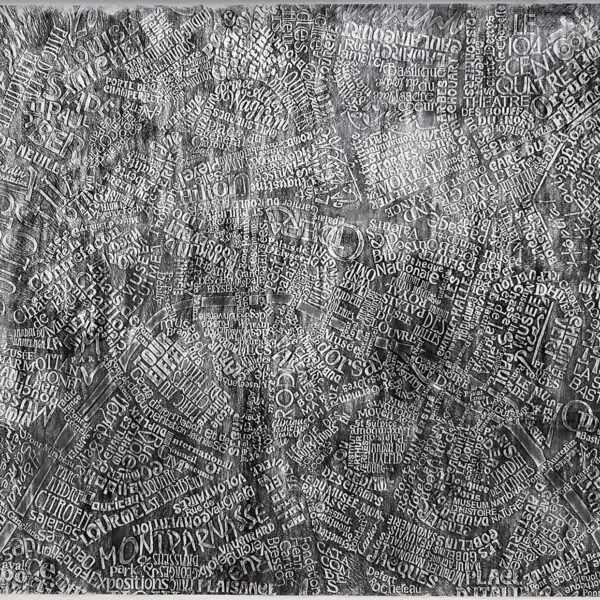
Paris - charcoal linocut
1 of 1 remaining
£3,000.00
Berlin
1 of 12 remaining
£2,500.00
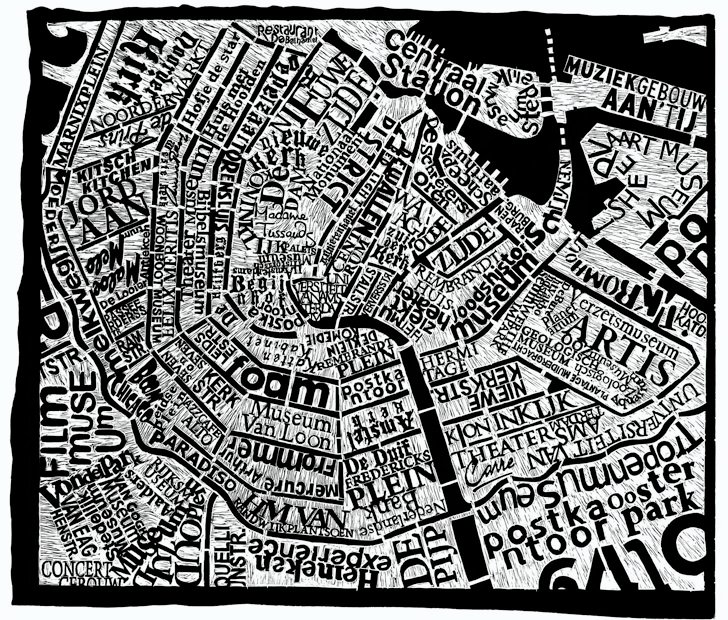
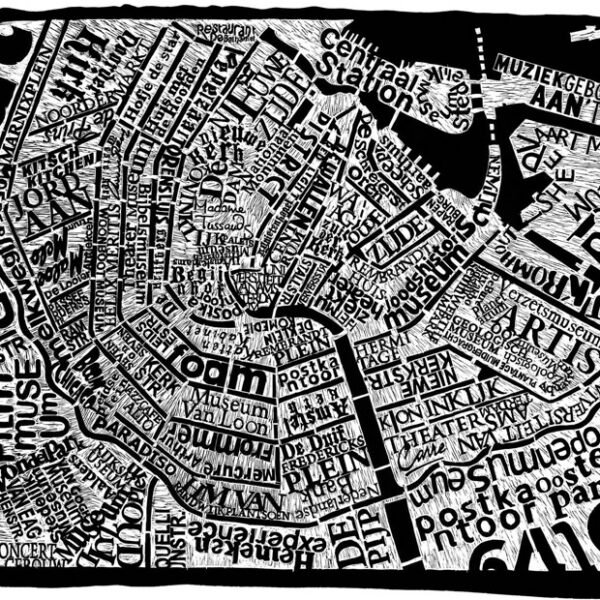
Amsterdam
100 of 300 remaining
£300.00
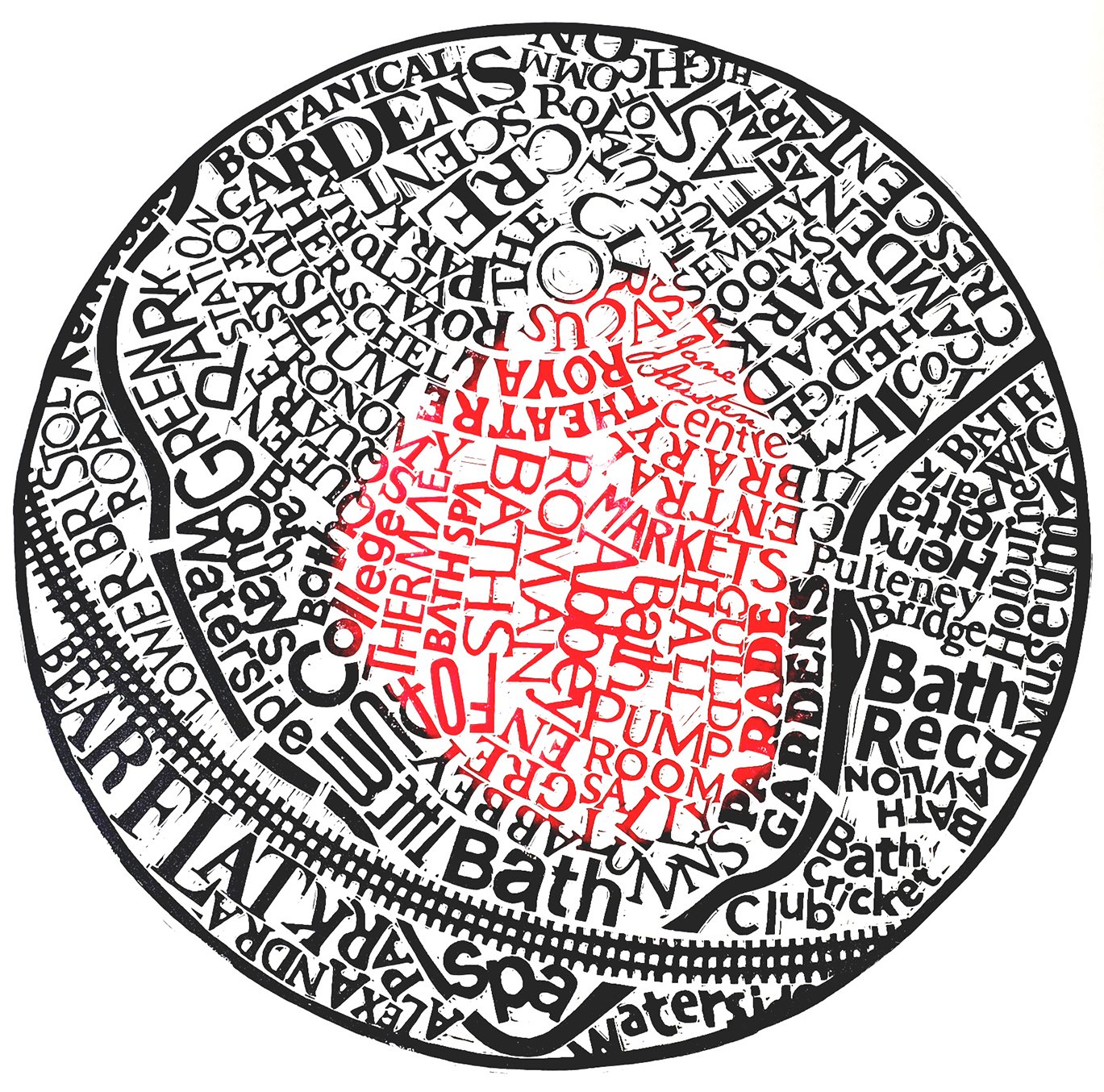
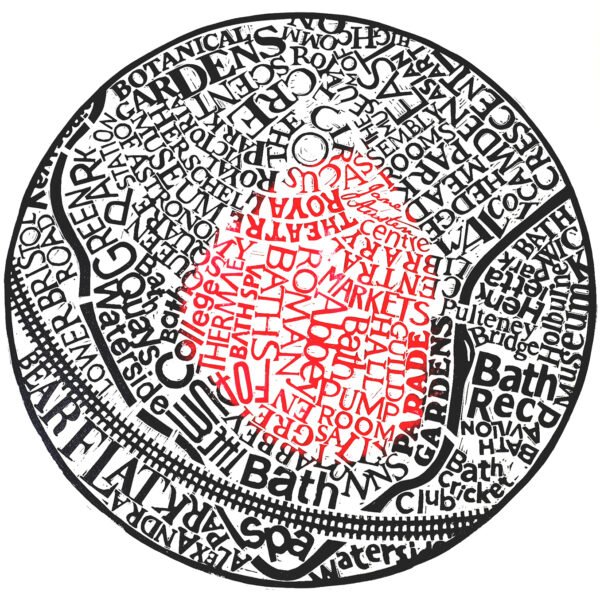
Bath
5 of 100 remaining
£250.00
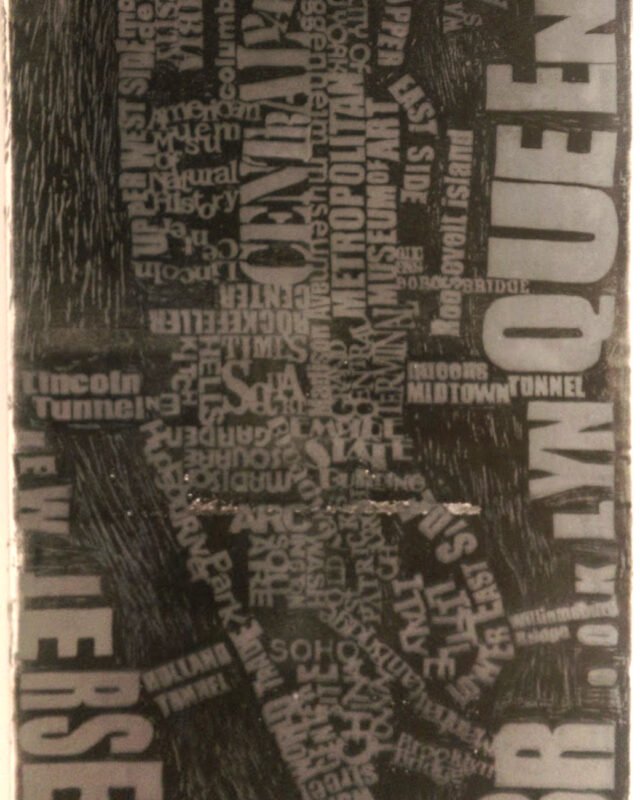
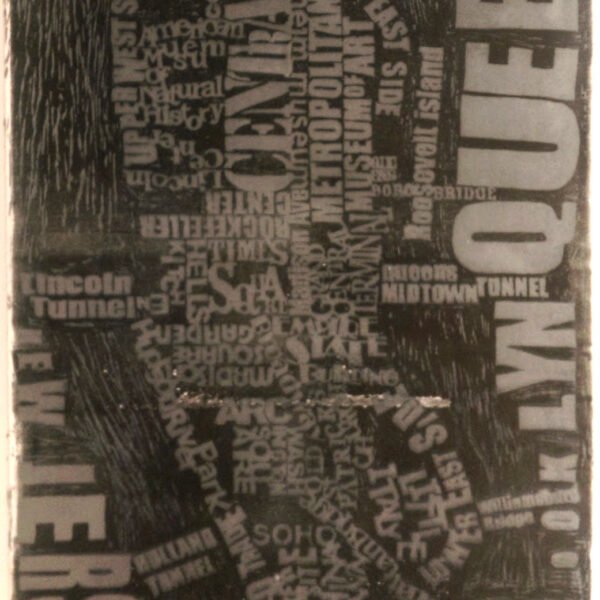
New York Ghost
Edition of 1
£1,200.00
Reading
Pre-release list open
Energetic
Edition of 1
£300.00
Chaos Waves
Edition of 1
£300.00
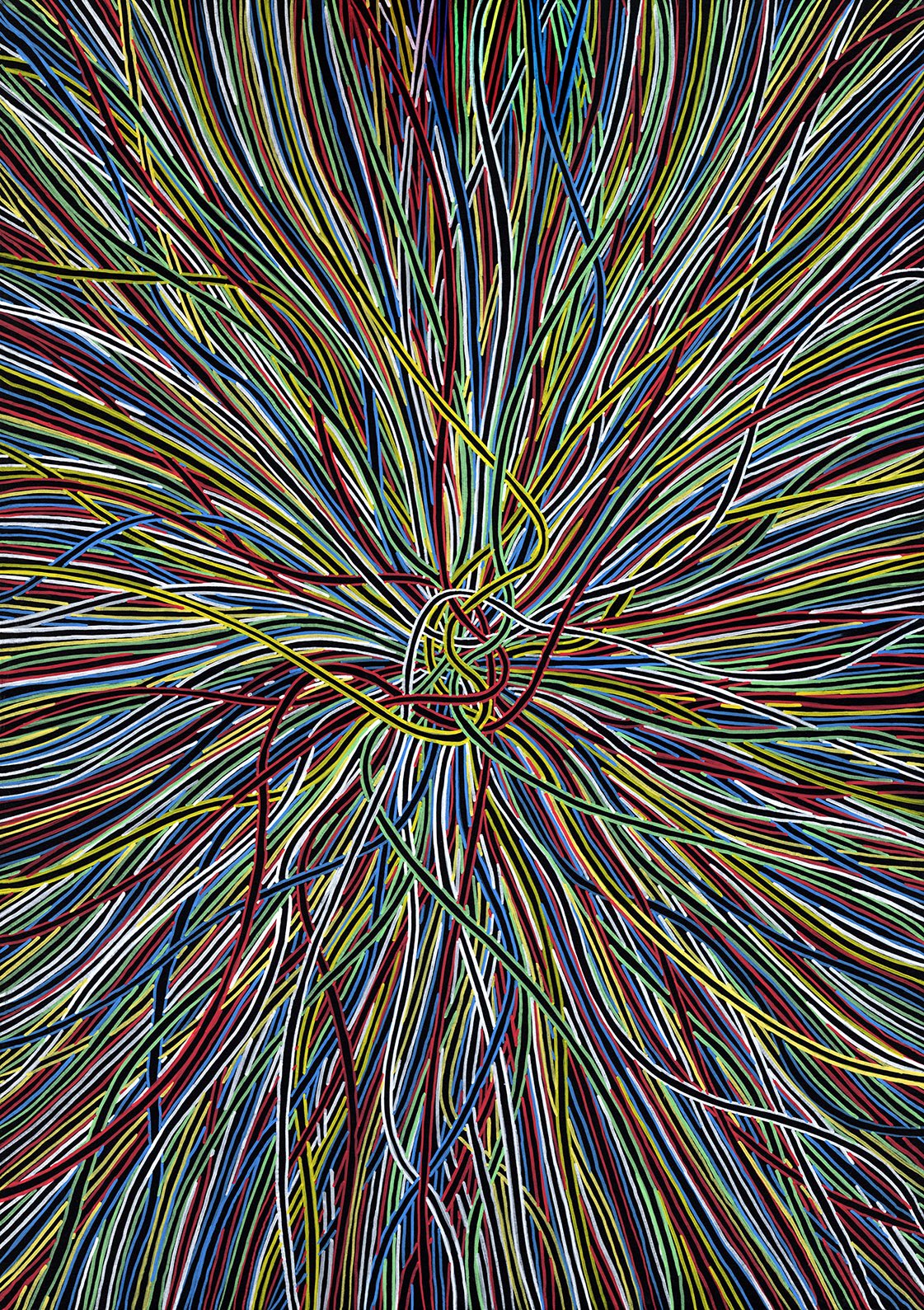
Knotted
Edition of 1
£300.00
Scouting
Edition of 1
£300.00
Beginning
Edition of 1
£300.00
Basking
Edition of 1 · Sold out
Hot and Cold
Edition of 1 · Sold out
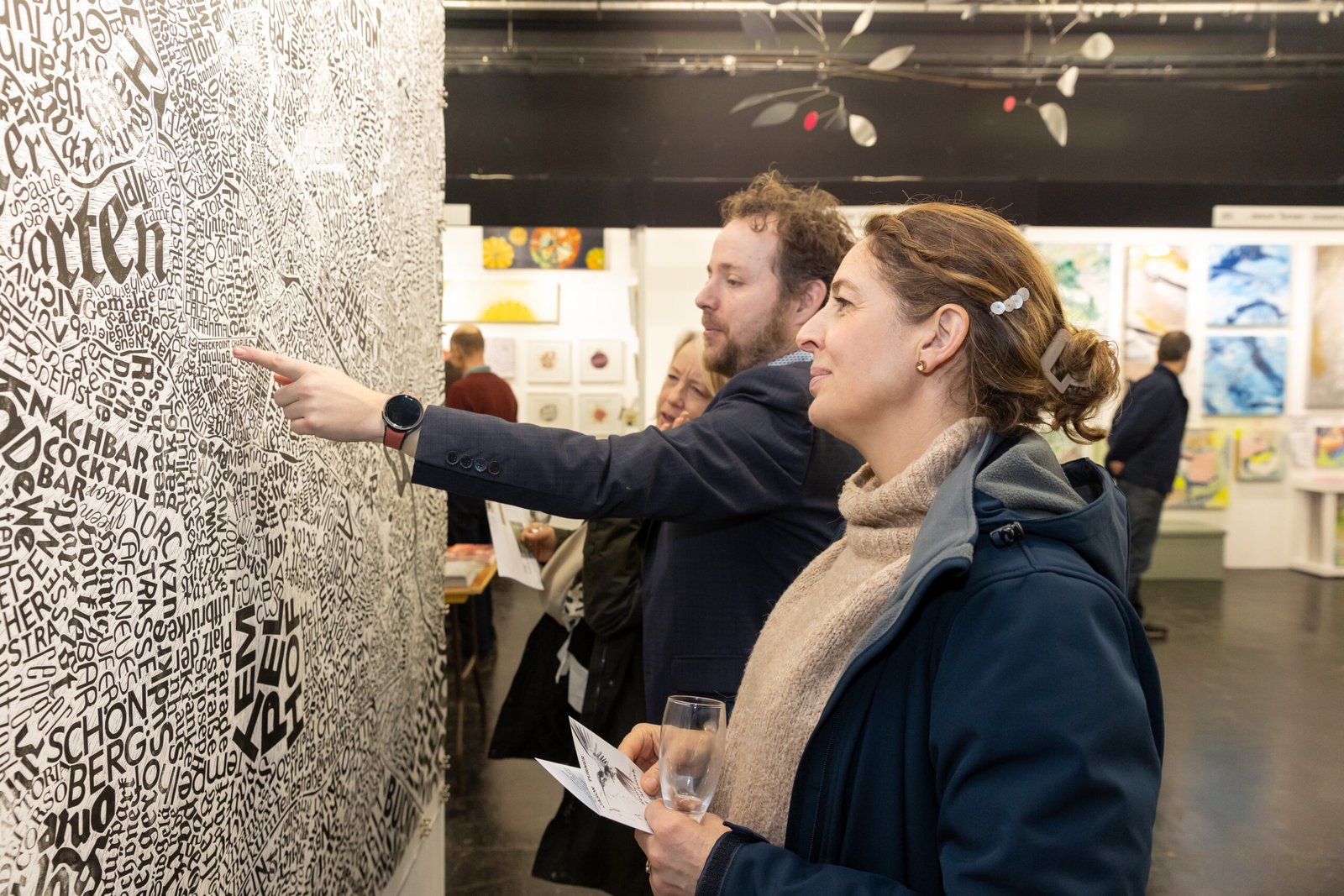
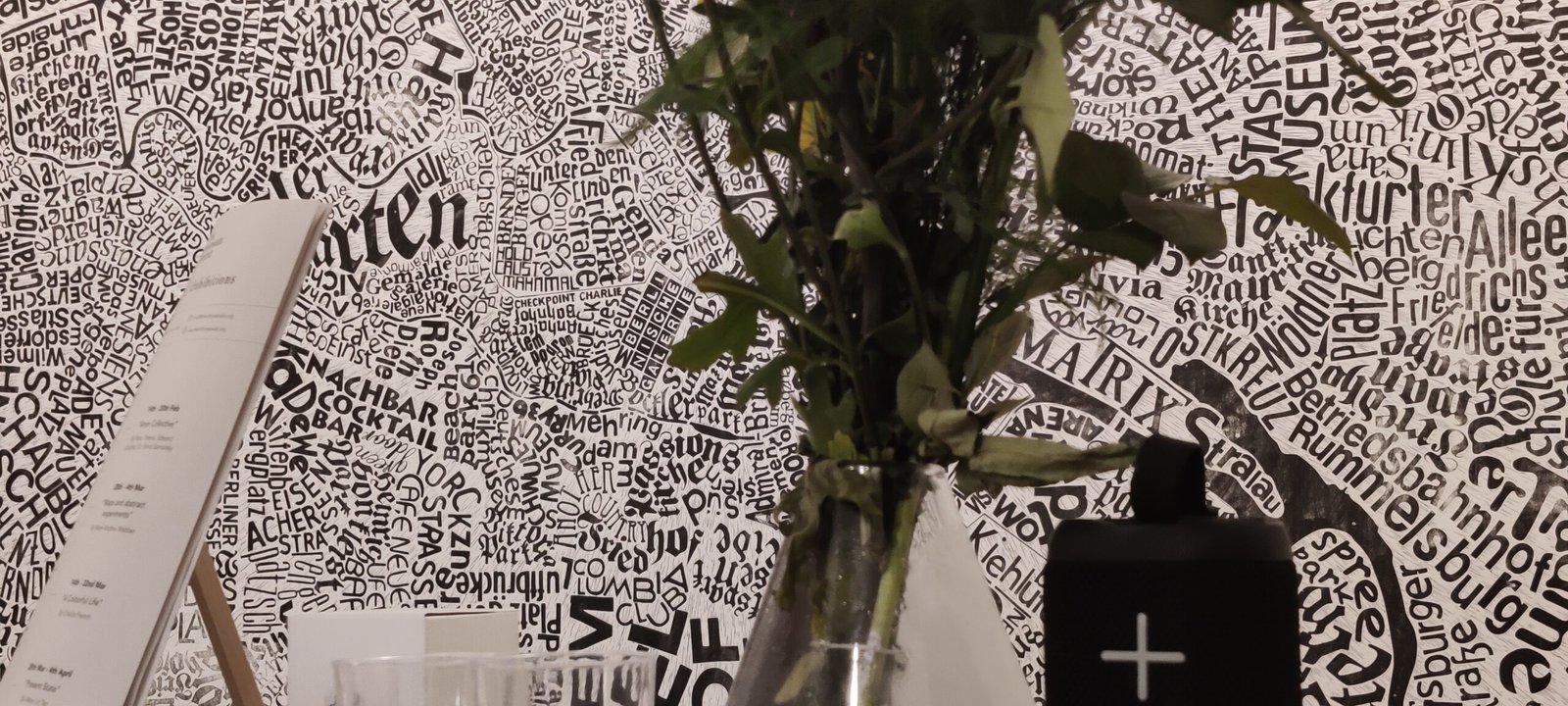
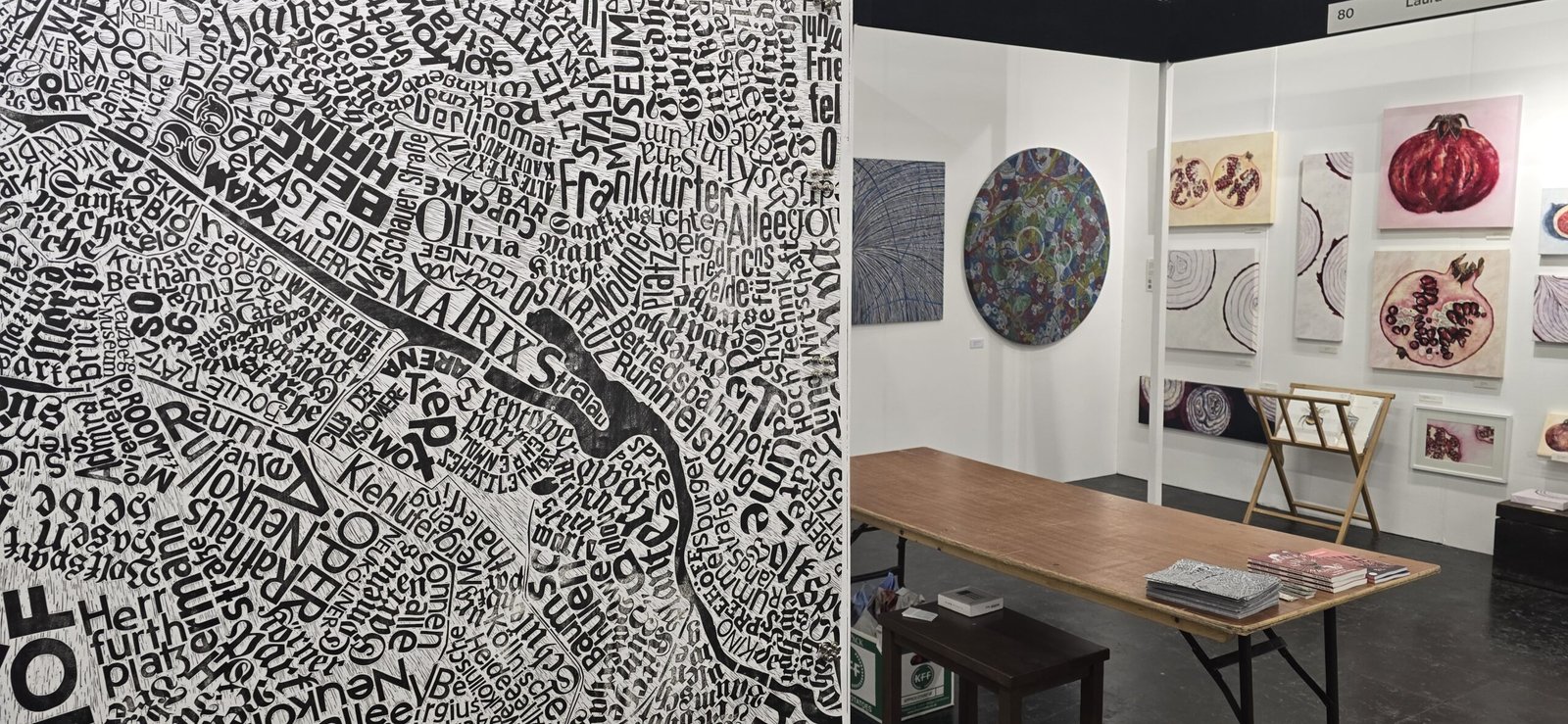
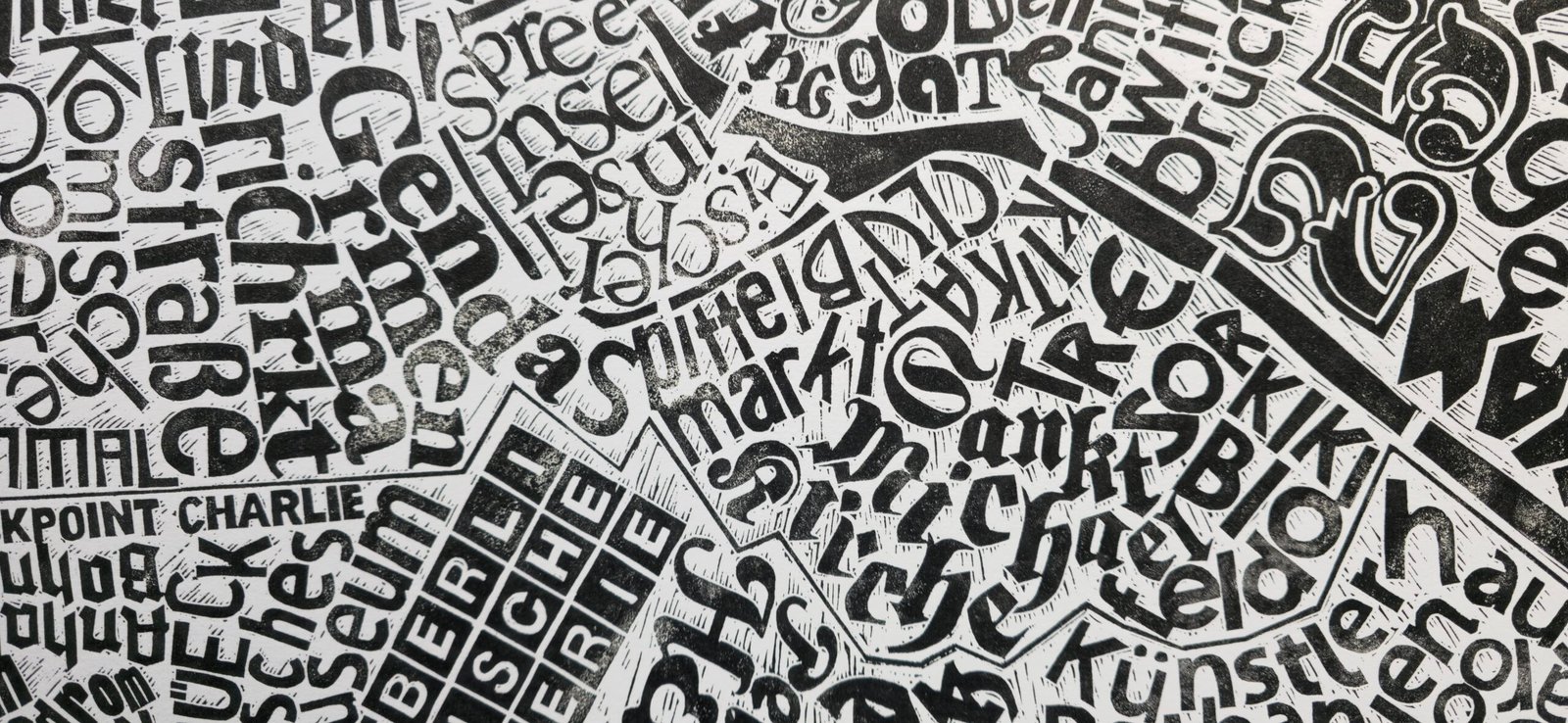
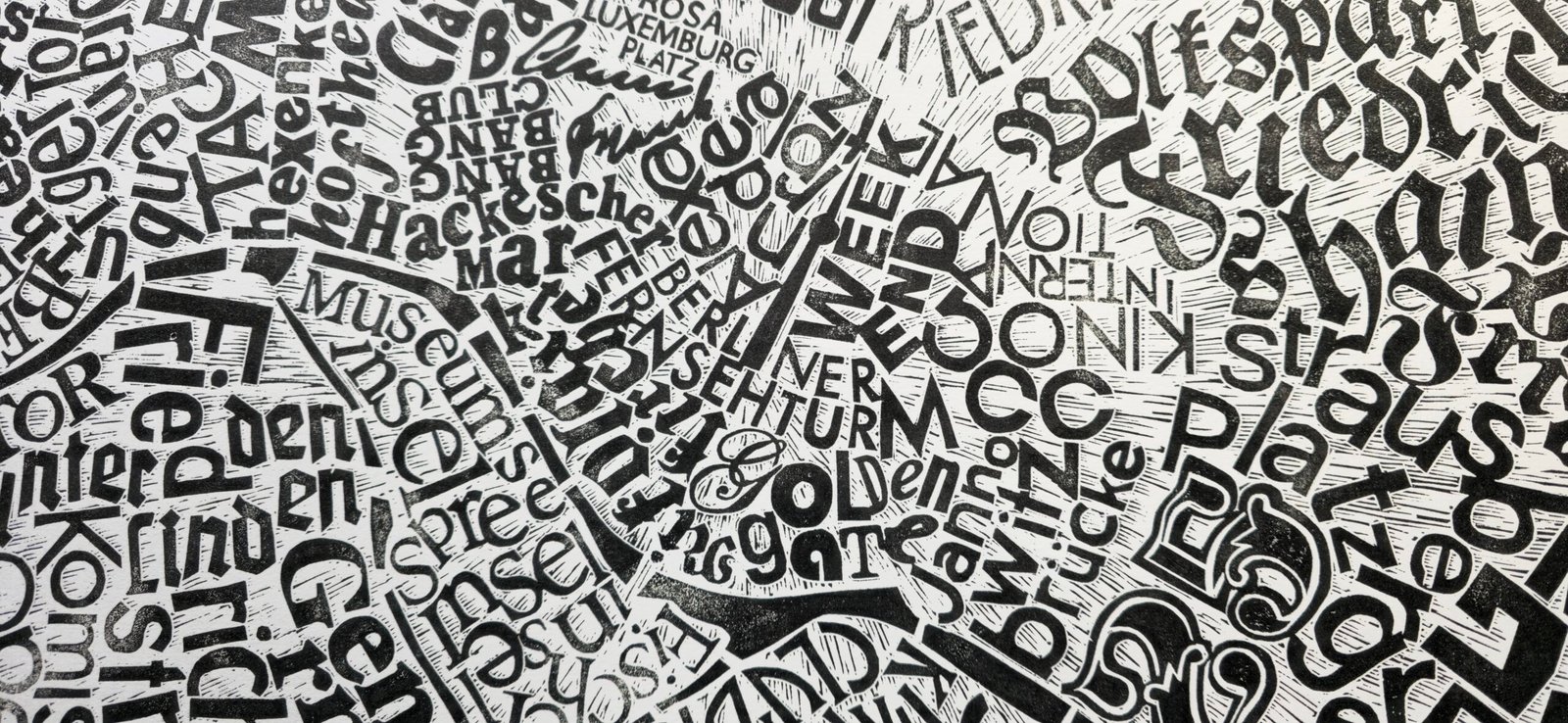
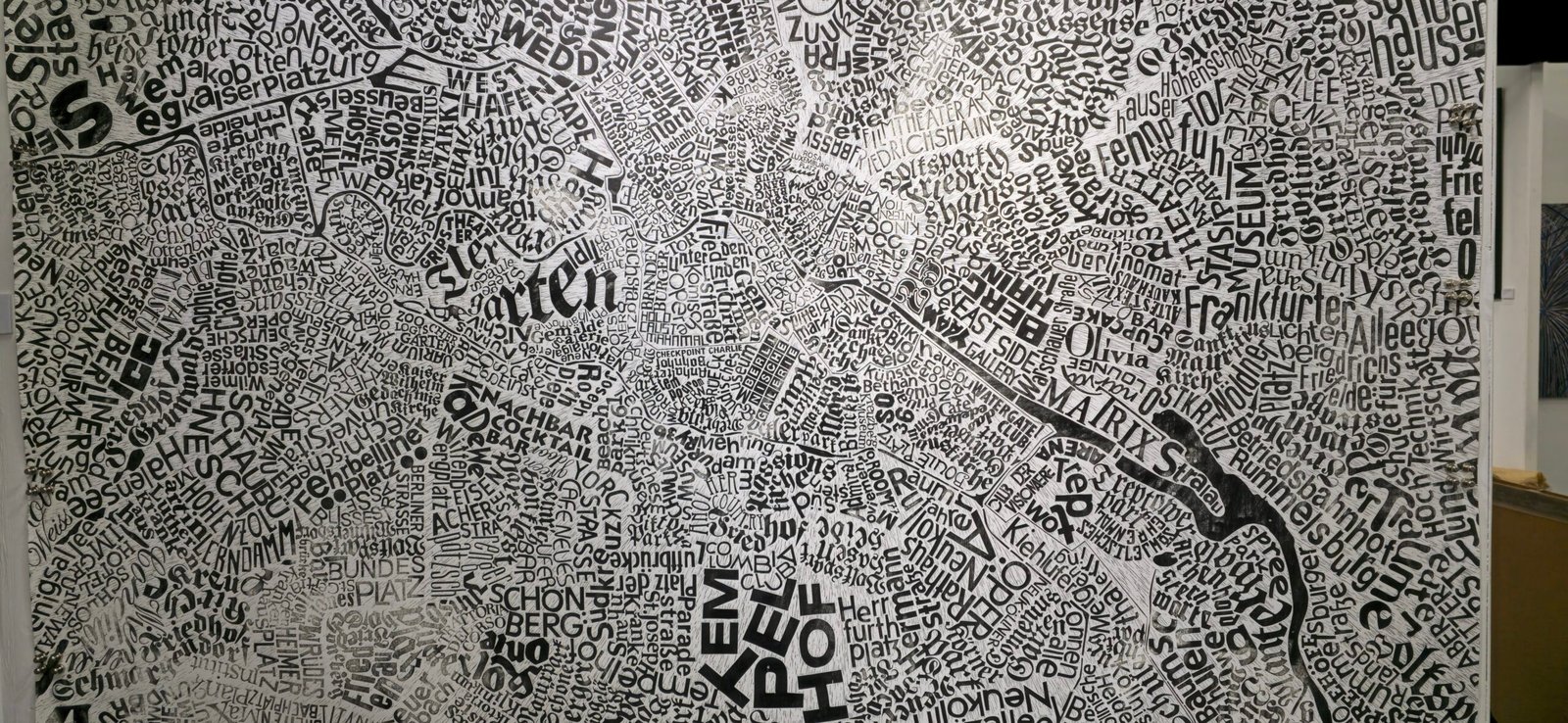
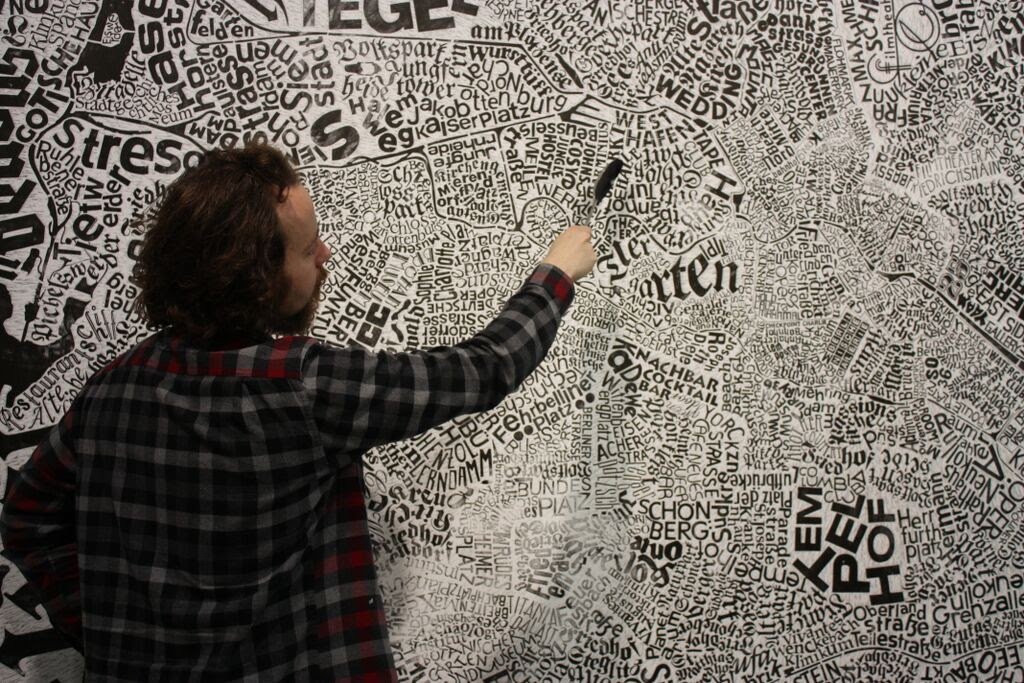
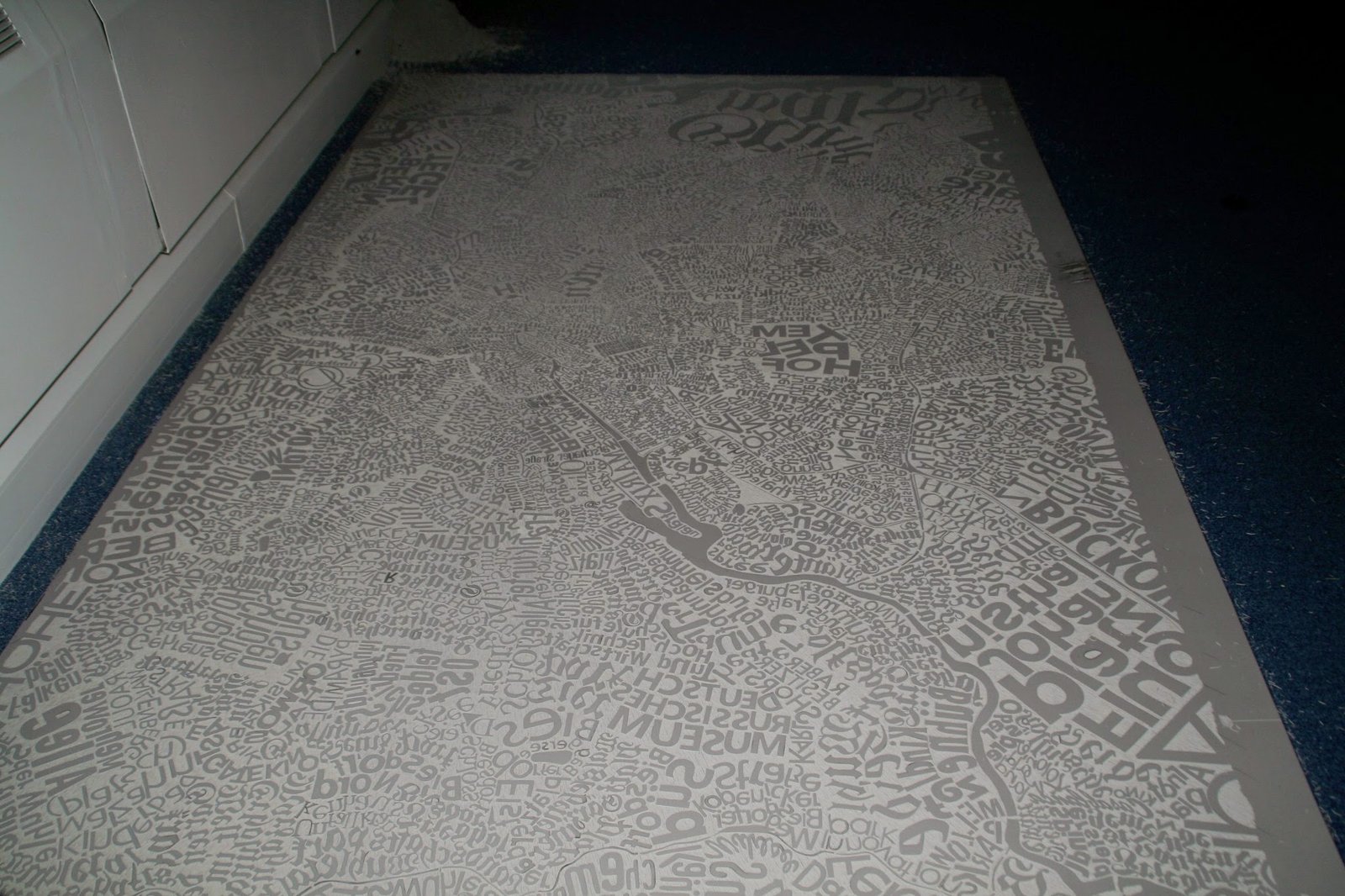
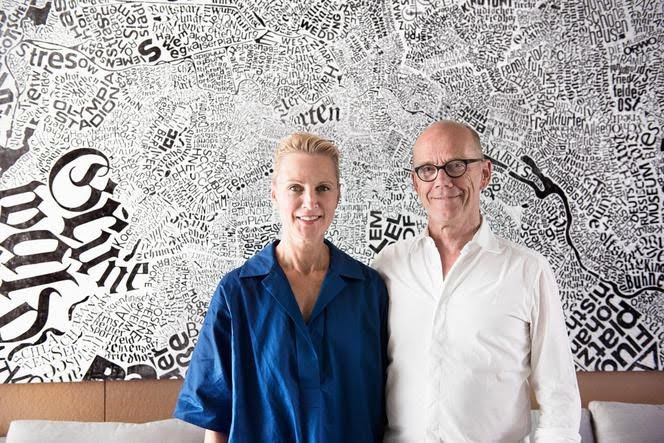
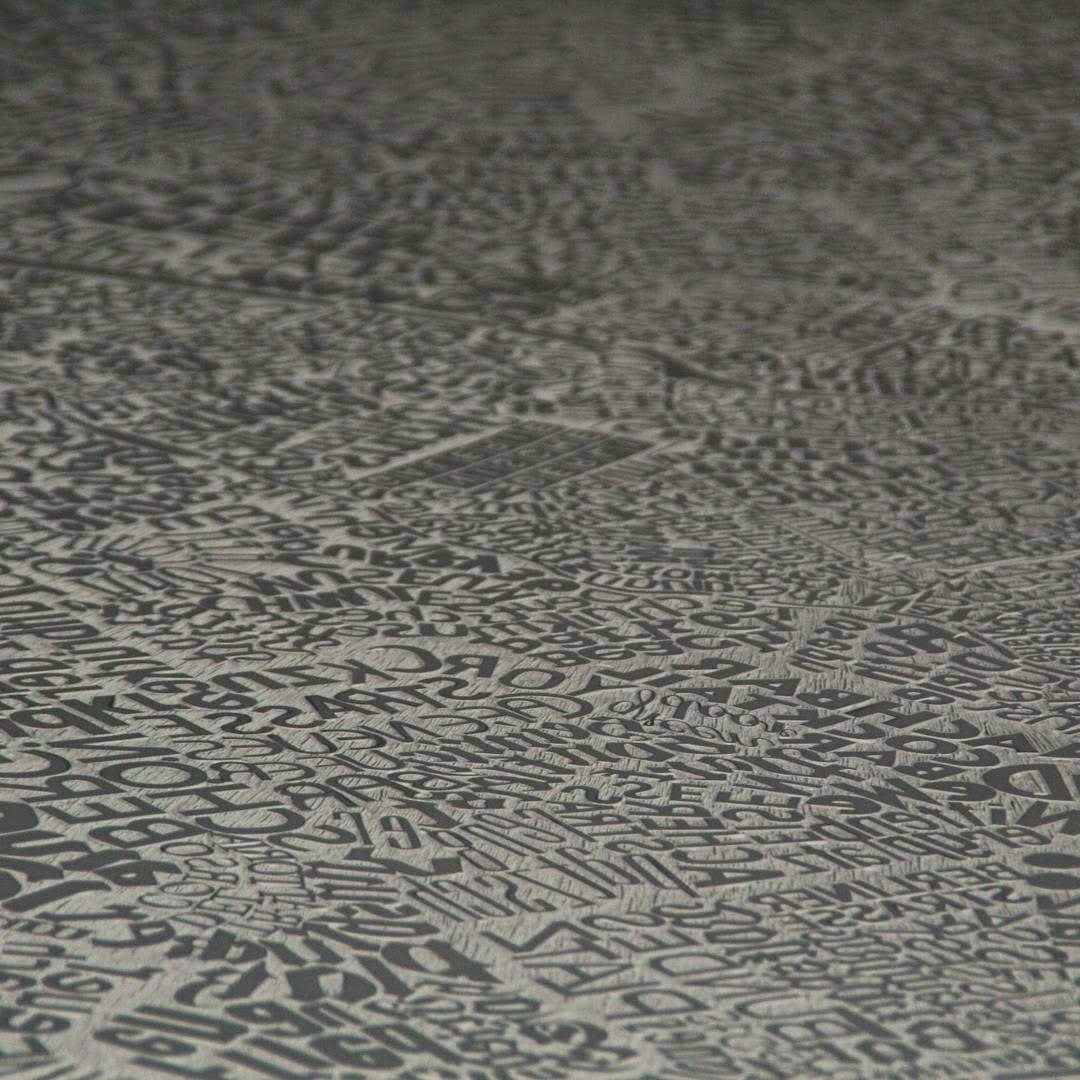
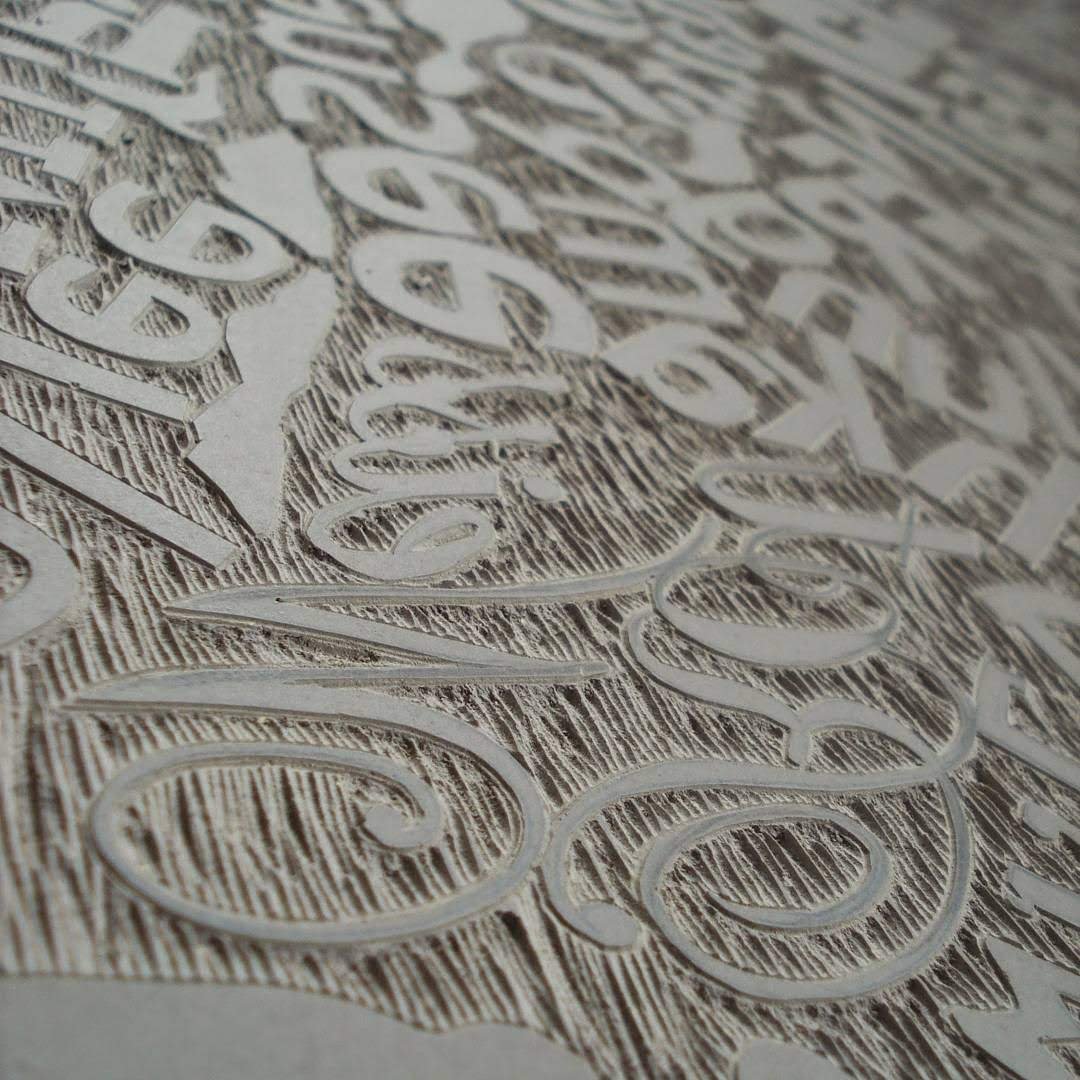
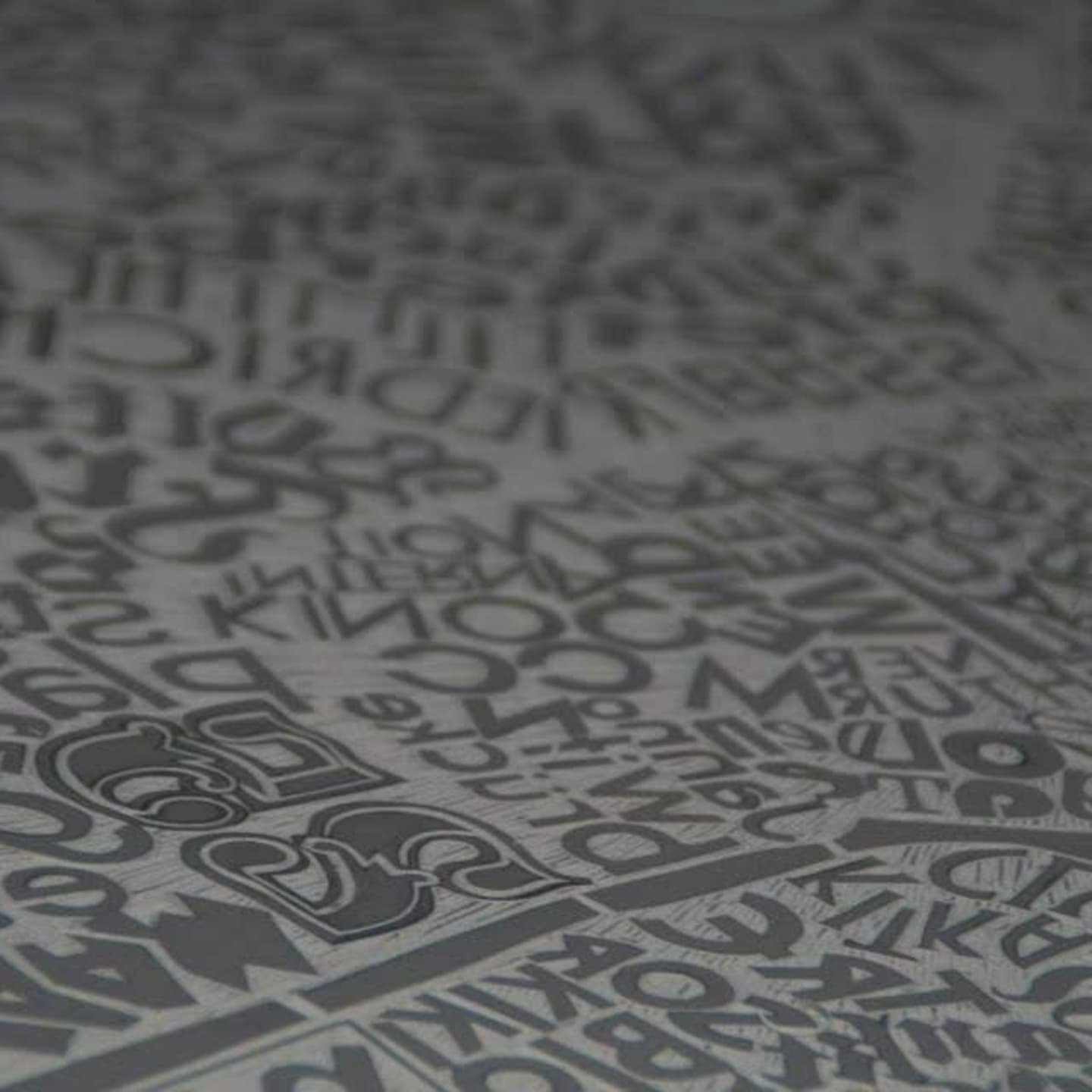
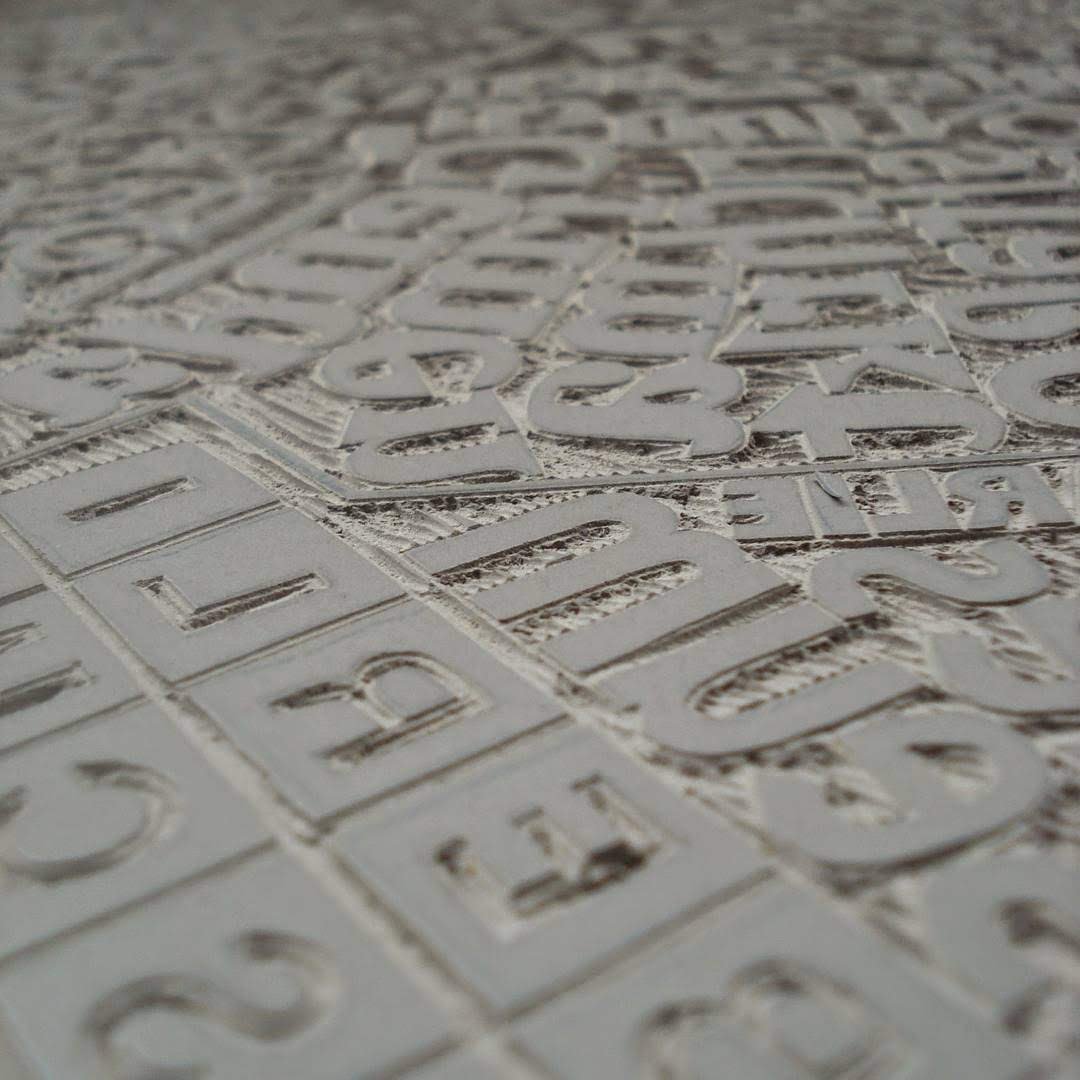
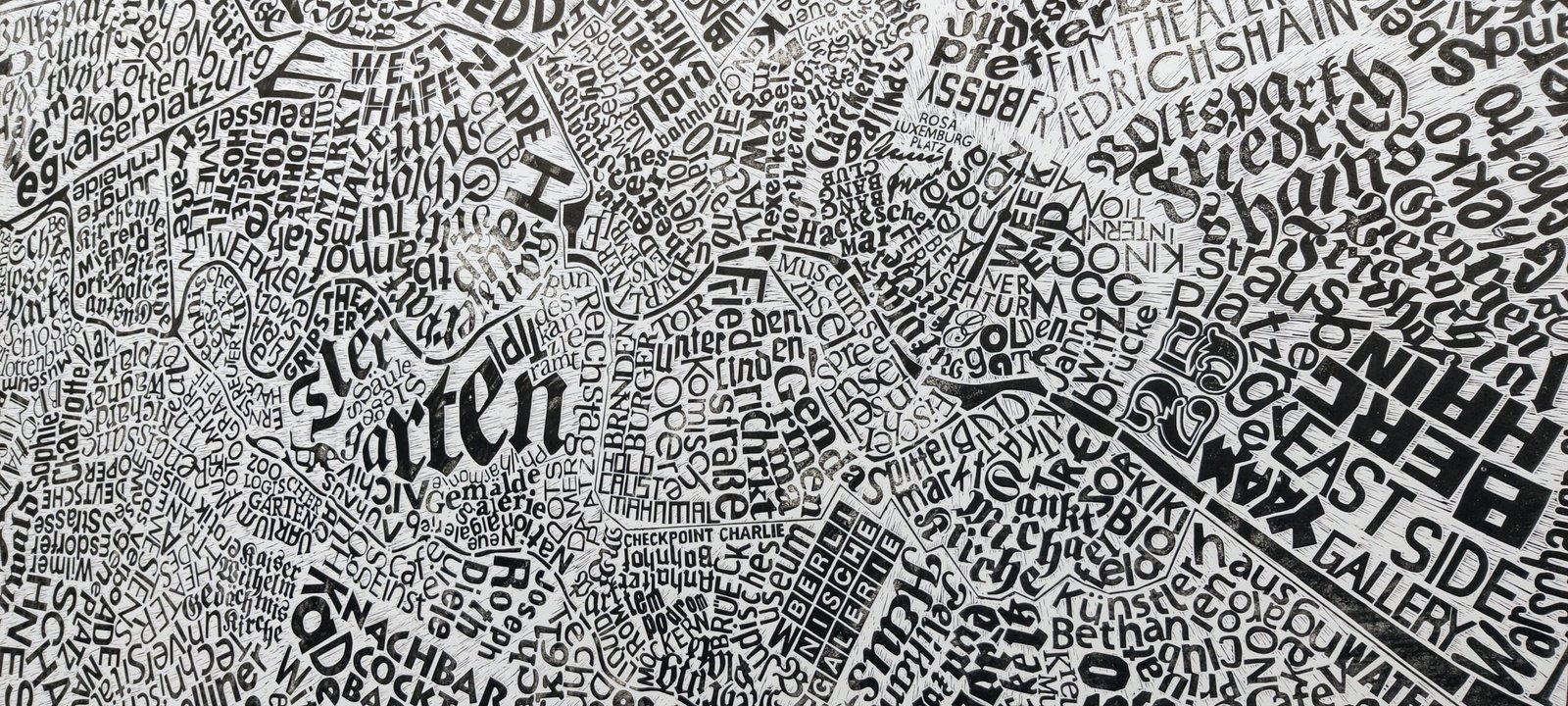
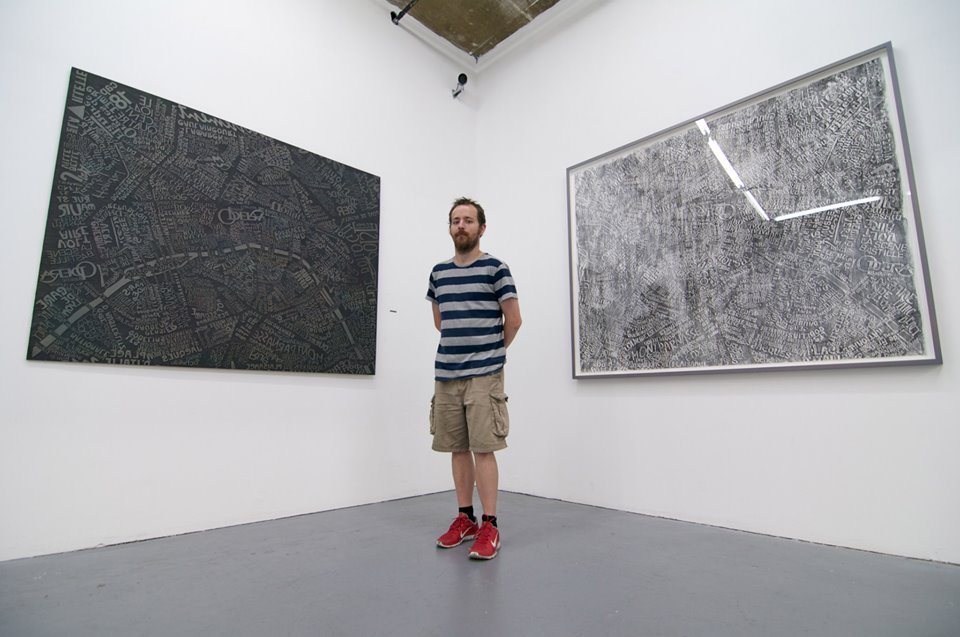
The largest map. Cut from a single sheet of lino, 3.4 × 1.74 metres, with the print trimmed down from the full block.
£2,500.00
After the earlier maps I wanted a bigger challenge, and a city with real history in the ground. Berlin kept pulling me in, so in 2010 I booked a ticket and went for two months to find the map on foot.
I stayed at John’s Cosy Jungle Hostel for a month, then rented an apartment for the second month with an American friend I had made there. I walked the city every day and at night. I rode every U-Bahn station, photographing the lettering as I went — restaurant signs, street signs, posters, the carved type on bridges. One of my favourite finds was an old-fashioned cinema sign in the north of the city. Those letterforms are in the map. The research photographs are still on Flickr.
I also traced the line of the Berlin Wall. You can still see its remnants marked in the pavement. That stayed with me, so I carved it as a single continuous line, without one break.
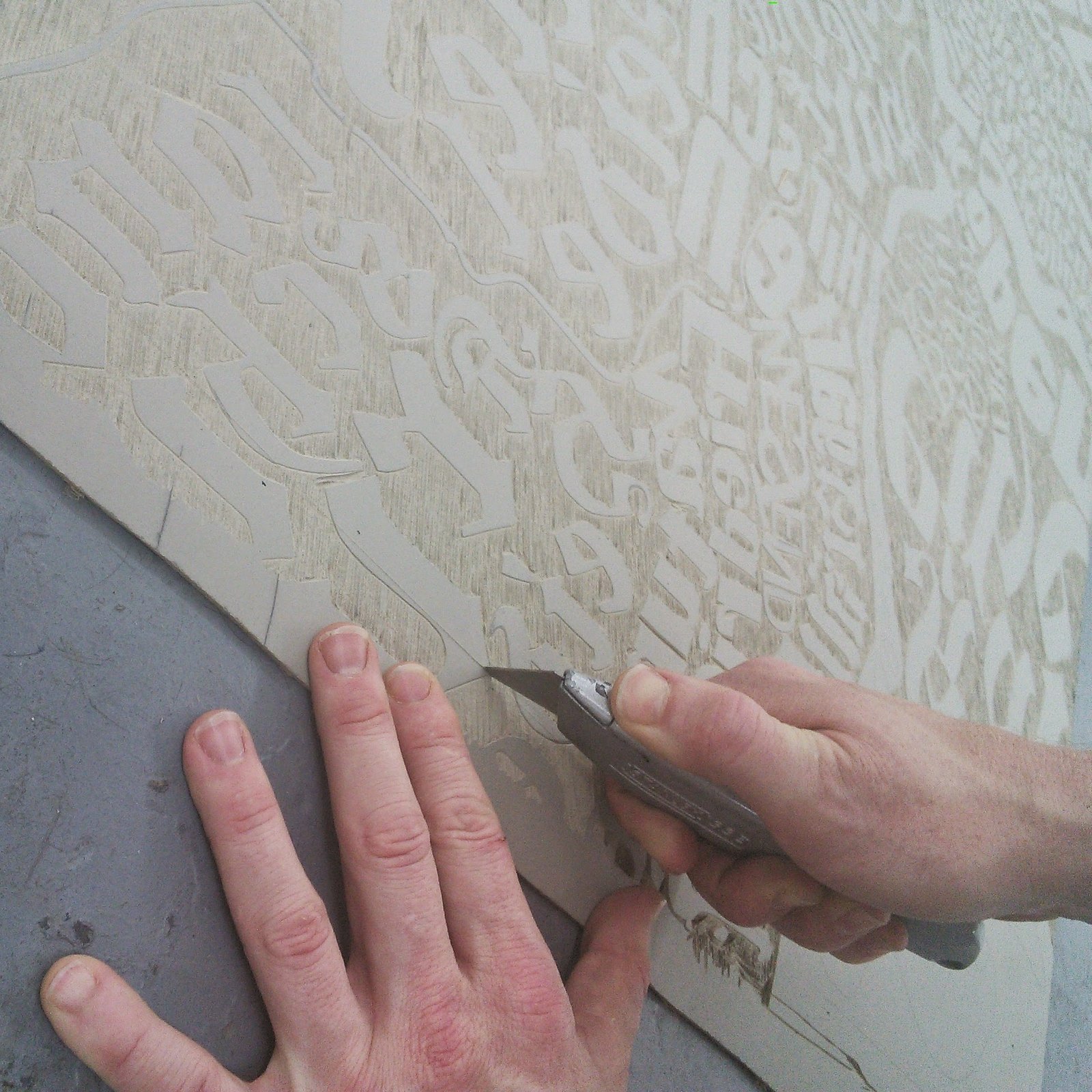
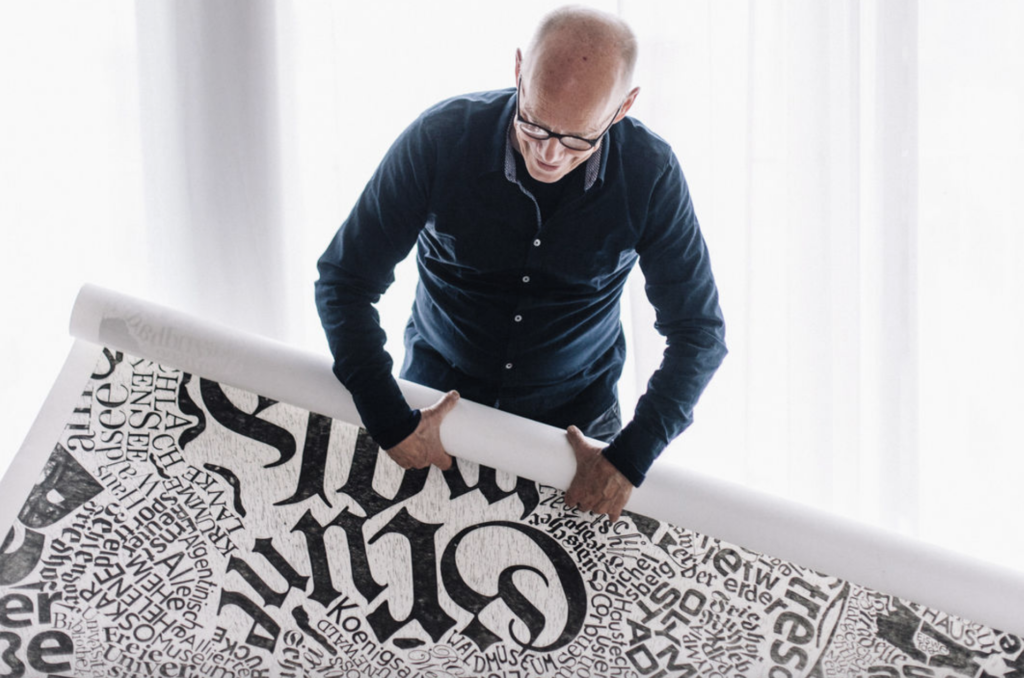
Back in the UK I spent a long time on the layout, leaving the main roads as open space and keeping the places I had found worth including. Then I worked out how big the block had to be and ordered the largest sheet of lino I could get: 3.4 × 1.74 metres. The print here is smaller. I cut the edges down later. It was still the city, and more likely to fit on a wall.
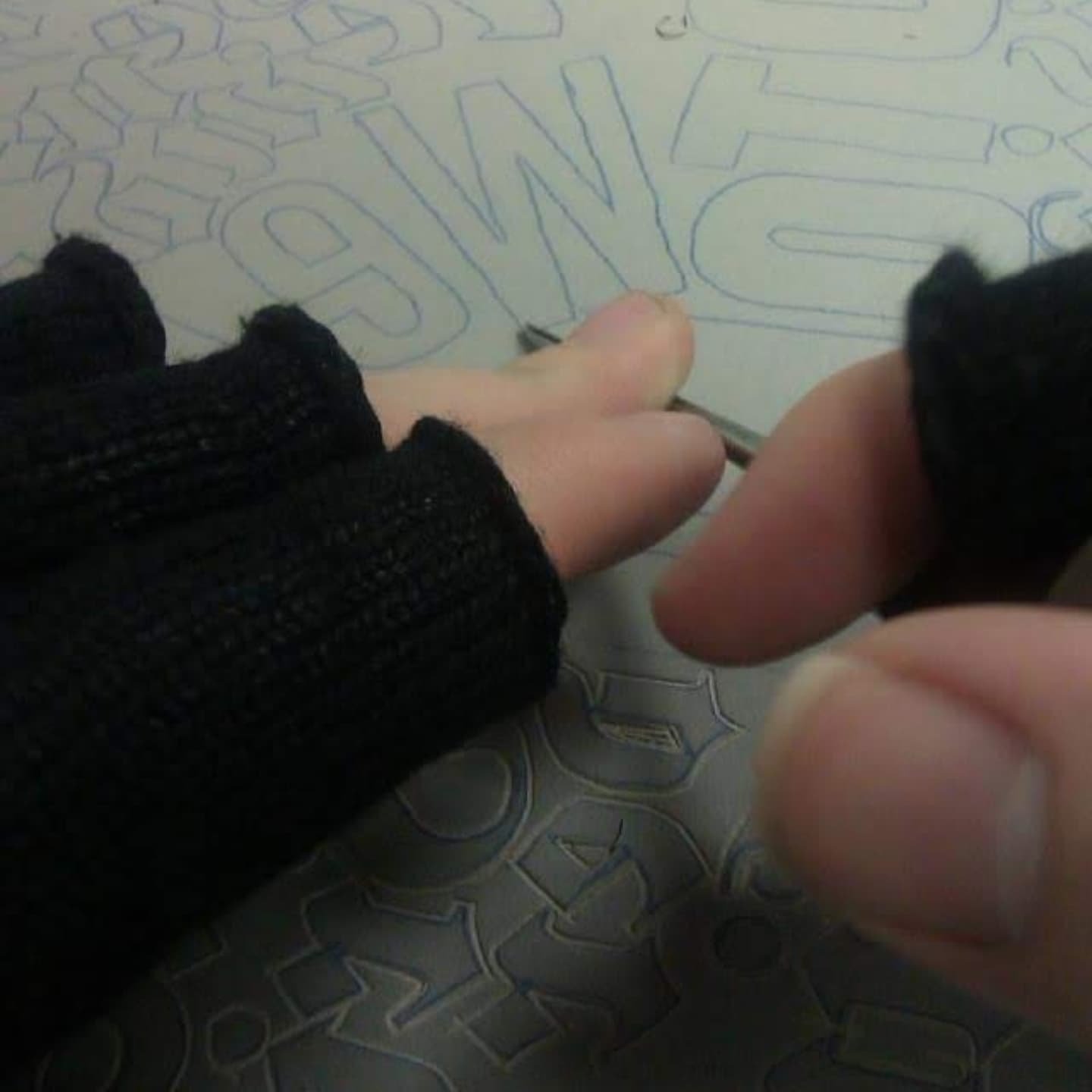
Finding somewhere to carve it was its own problem. In Reading I came across Jelly, the arts charity in Market Place. They gave me a studio, and I was with them for two and a half years; the carving itself was five months of that. Knowing the clock was ticking, I worked seven days a week, twelve to sixteen hours a day, without a day off. There is a time-lapse of those months. Other artists were in the building. People came through and watched.
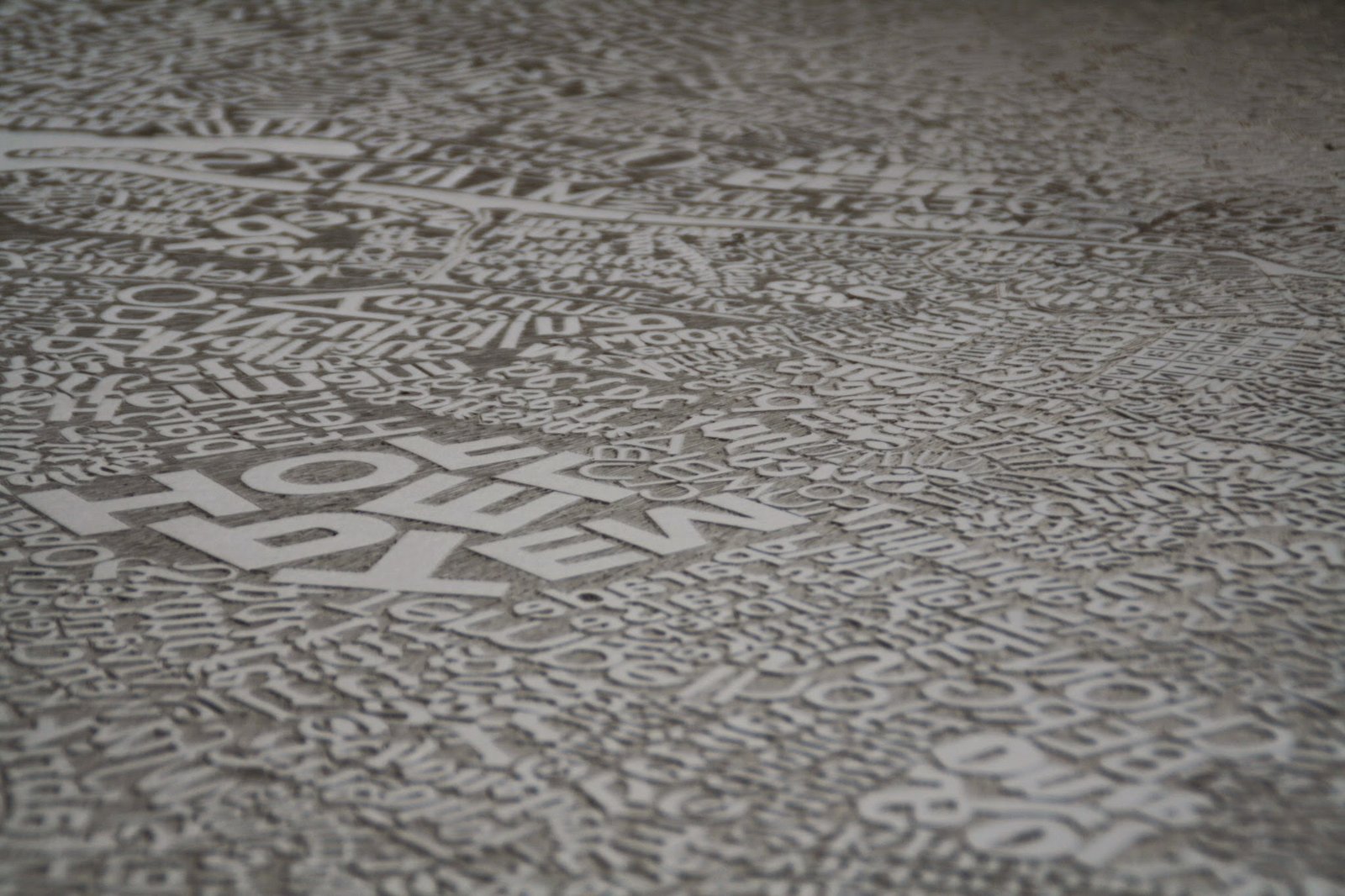
One detail I am quietly proud of: after cutting around every letter, I cleared the background in strokes all pointing towards the TV Tower, so the grain of the lino runs to the centre. You would never catch it from across a room. Up close it is there.
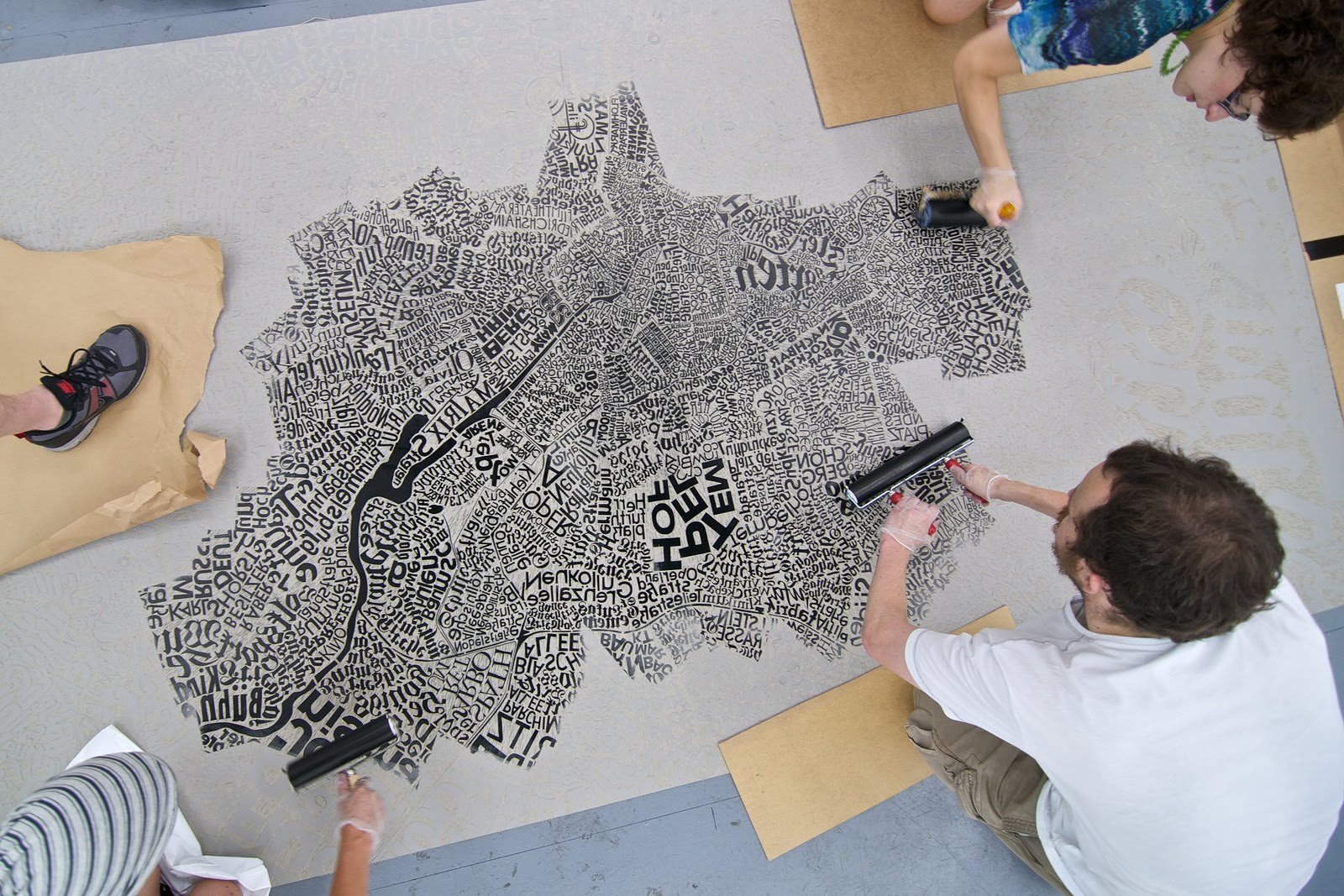
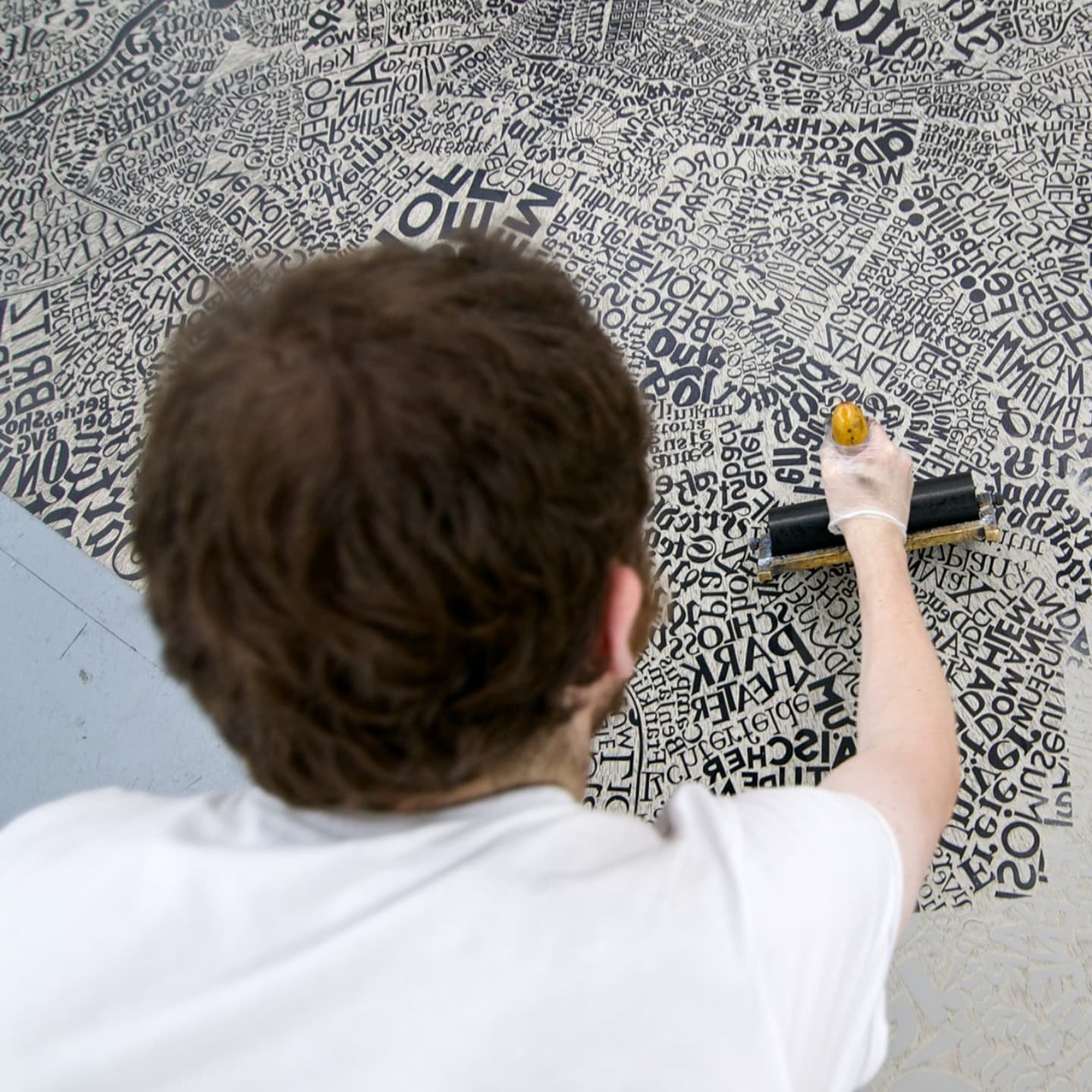
Lino that size is an awkward object to own. It cannot be rolled. It cracked the first time I moved it, and it has been mounted on wood ever since. Printing takes about five hours of rolling out ink to get even coverage, and then the paper is laid on and rubbed by hand.

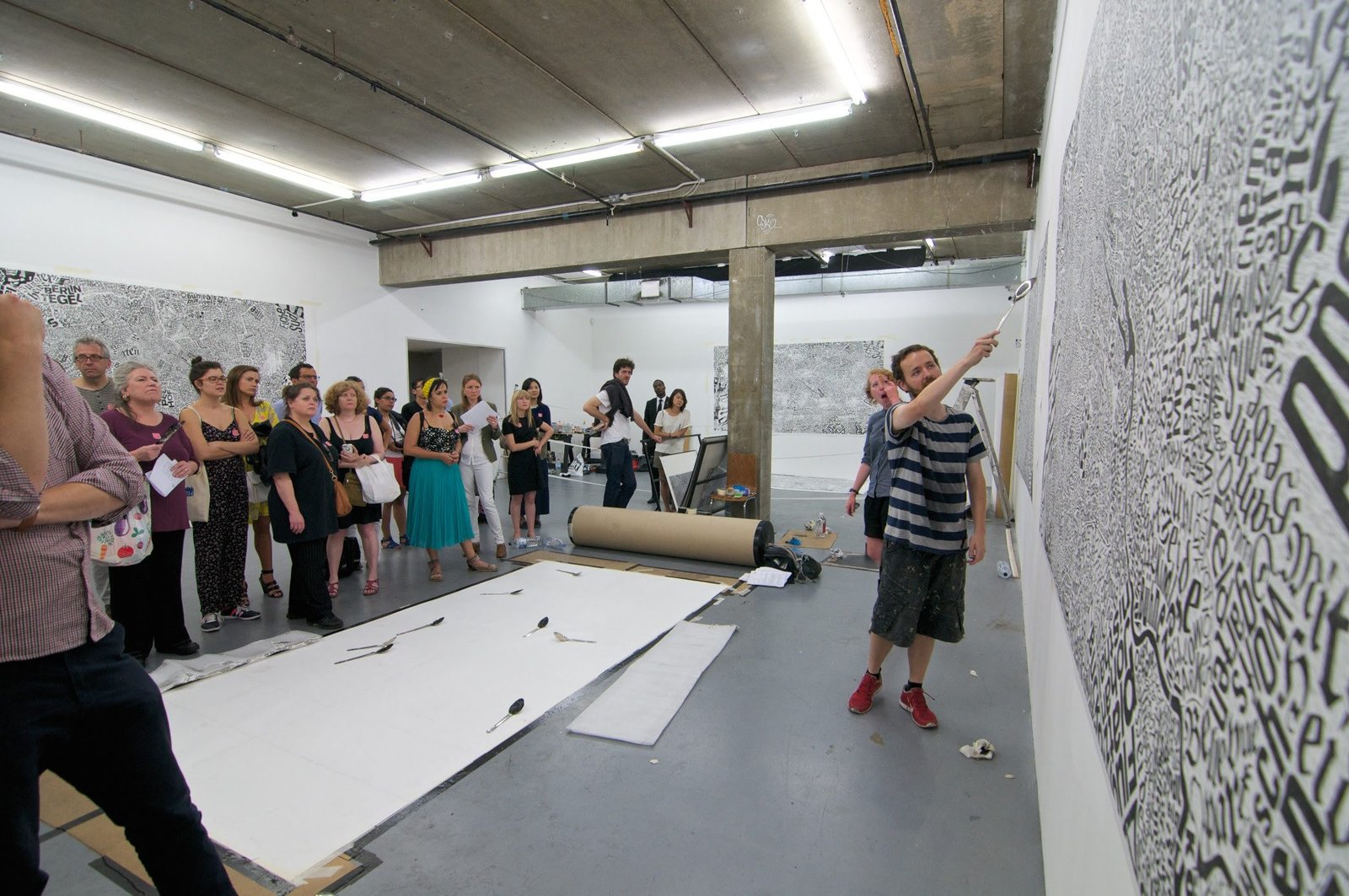
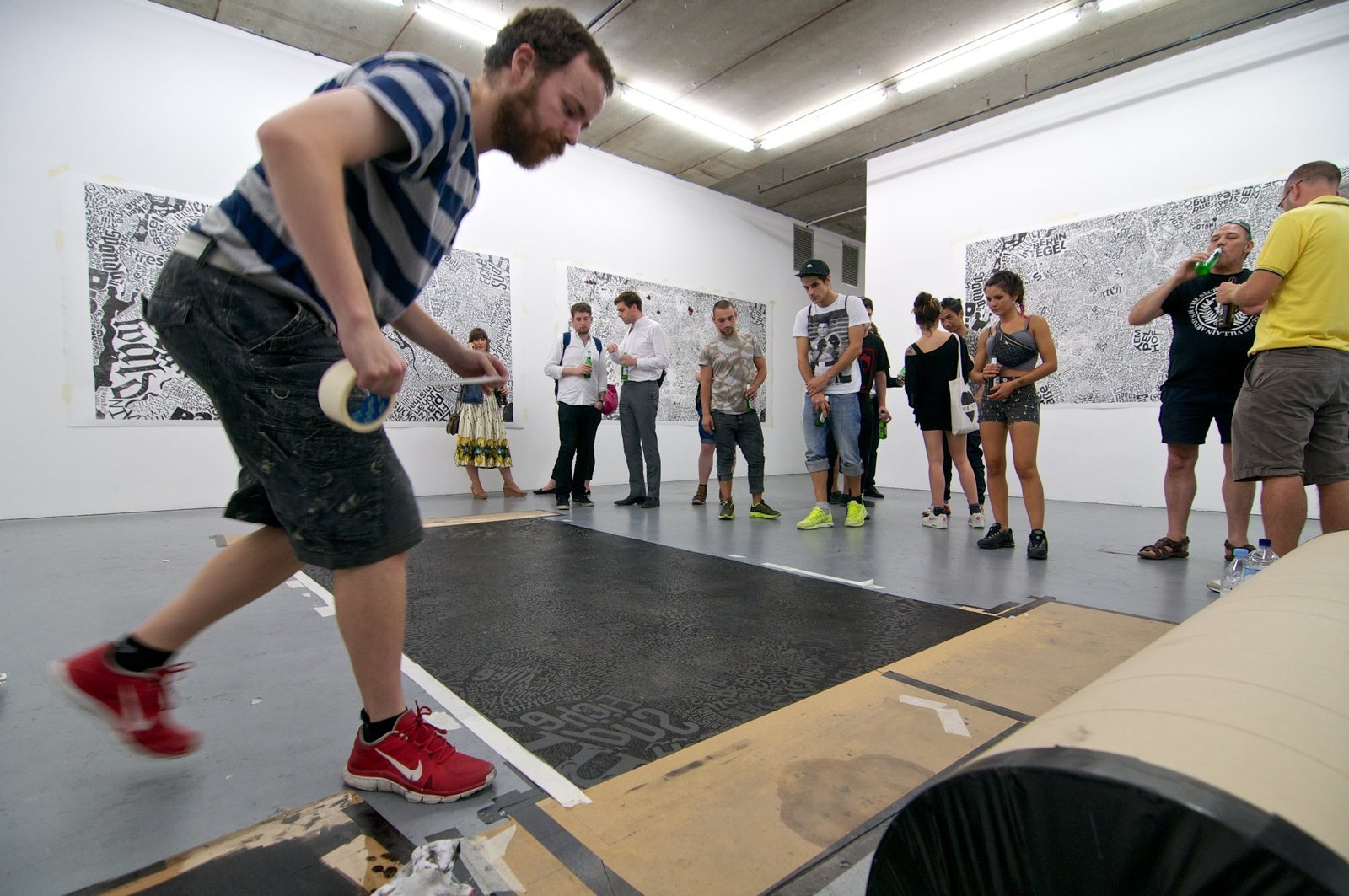
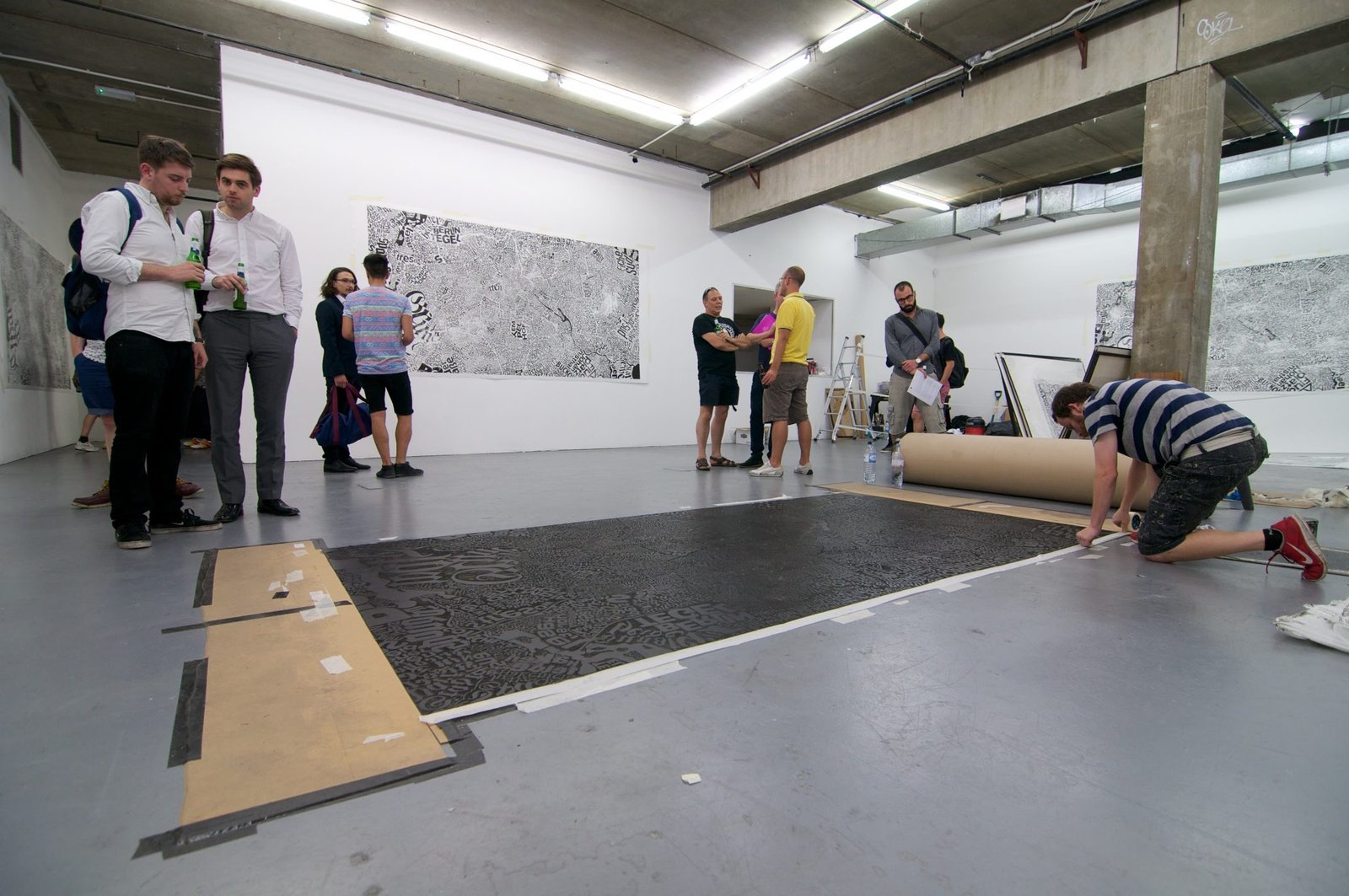
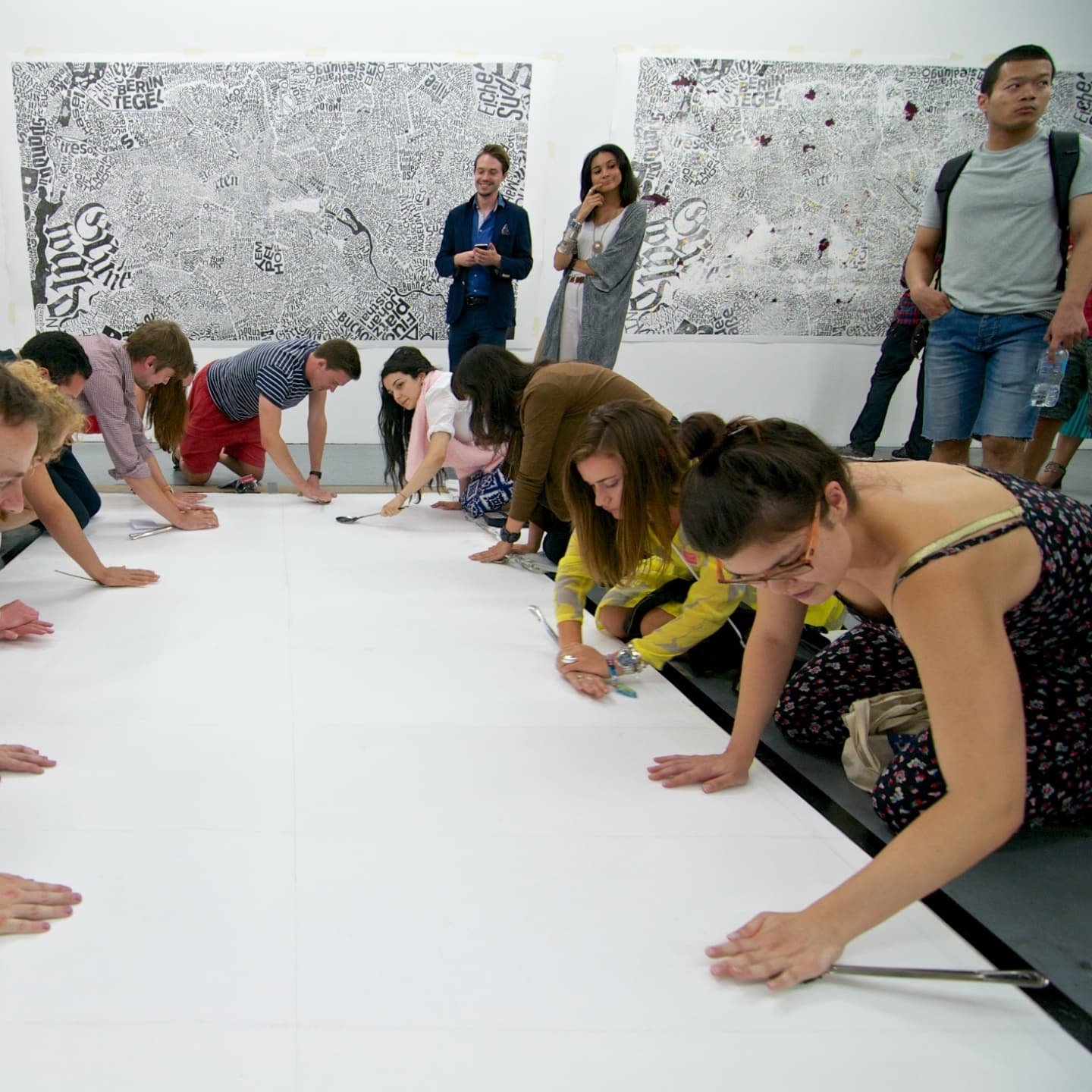
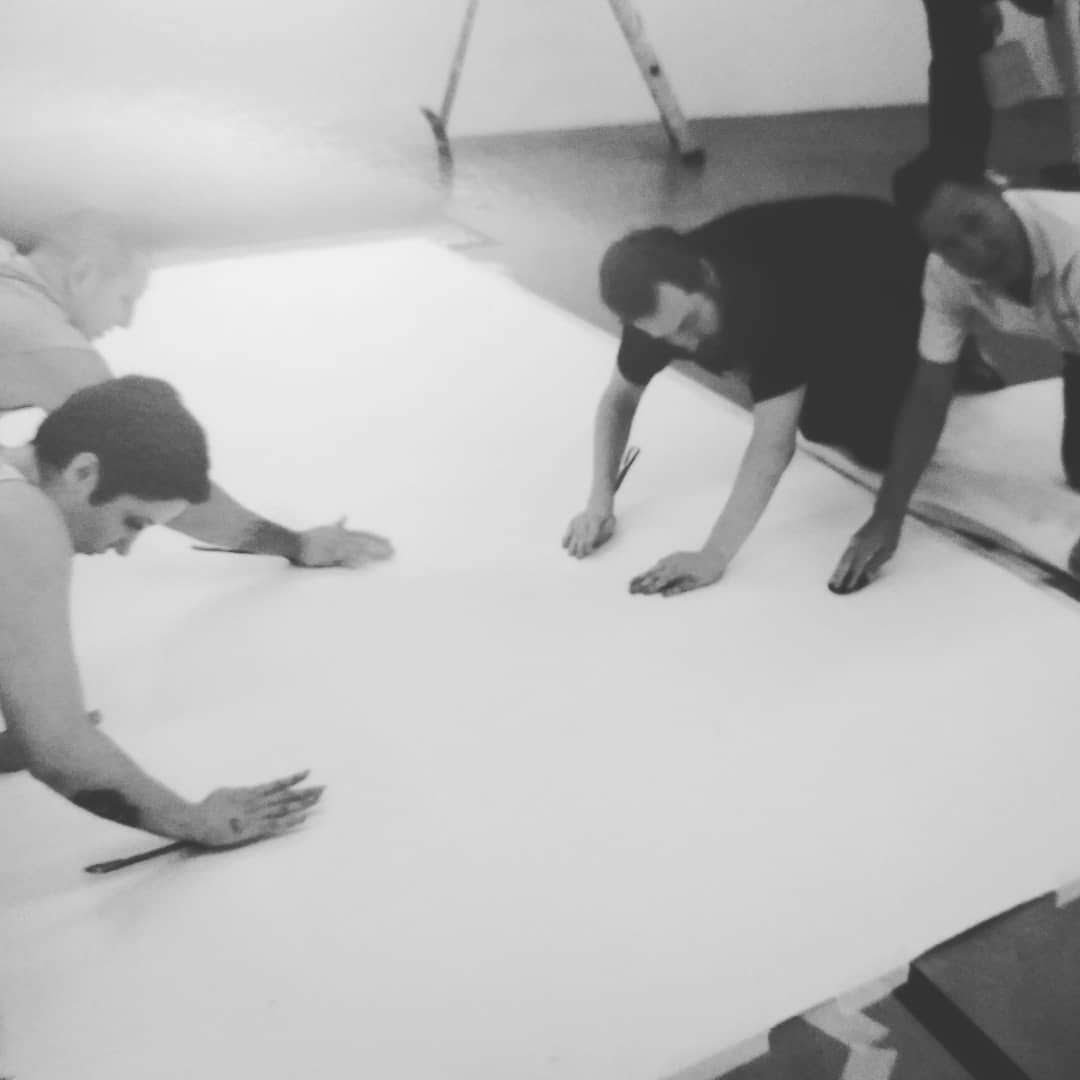
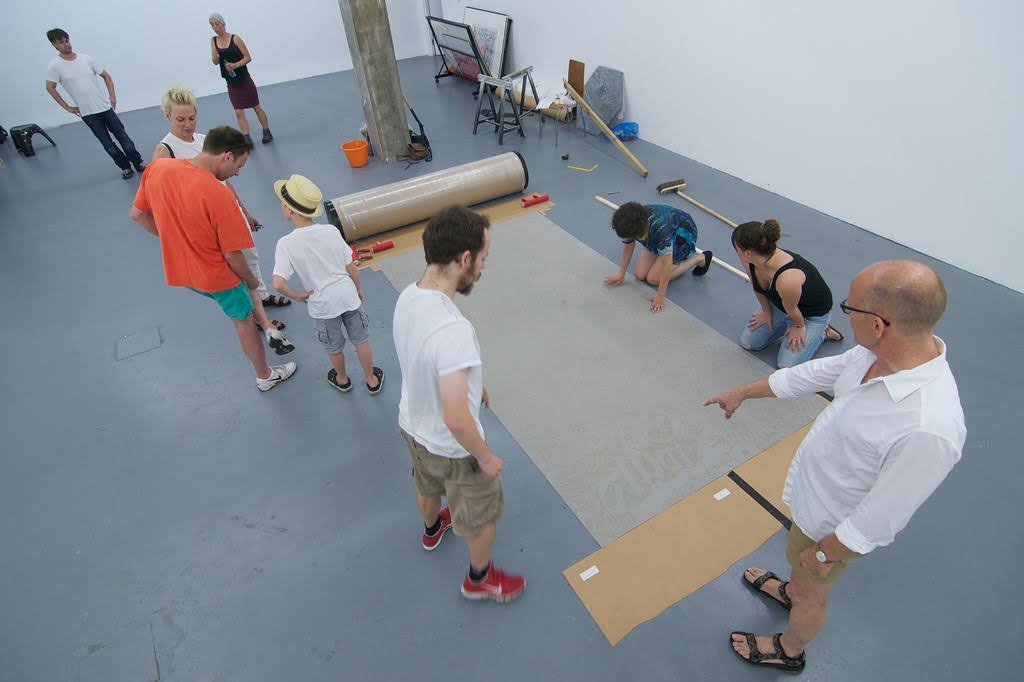
The first prints happened at Wonderlust, my solo show at the Londonewcastle Project Space in Shoreditch. By luck Erik Spiekermann turned up the day before, while I was inking up. We tried a big roller loaded with wet sand, which did not work at all, so we printed with large serving spoons. About five hundred people came to the opening. A lot of them ended up on their hands and knees, rubbing the back of the paper. One square of the grid got ticked without being done, and you can still see it. The BBC wrote an article about the show.
This is one of the remaining prints from that edition. Delivery is arranged by email rather than at checkout — use Enquire about this work and I will write back.